
An Unmuted Stories Original
The 100 Stories Project.
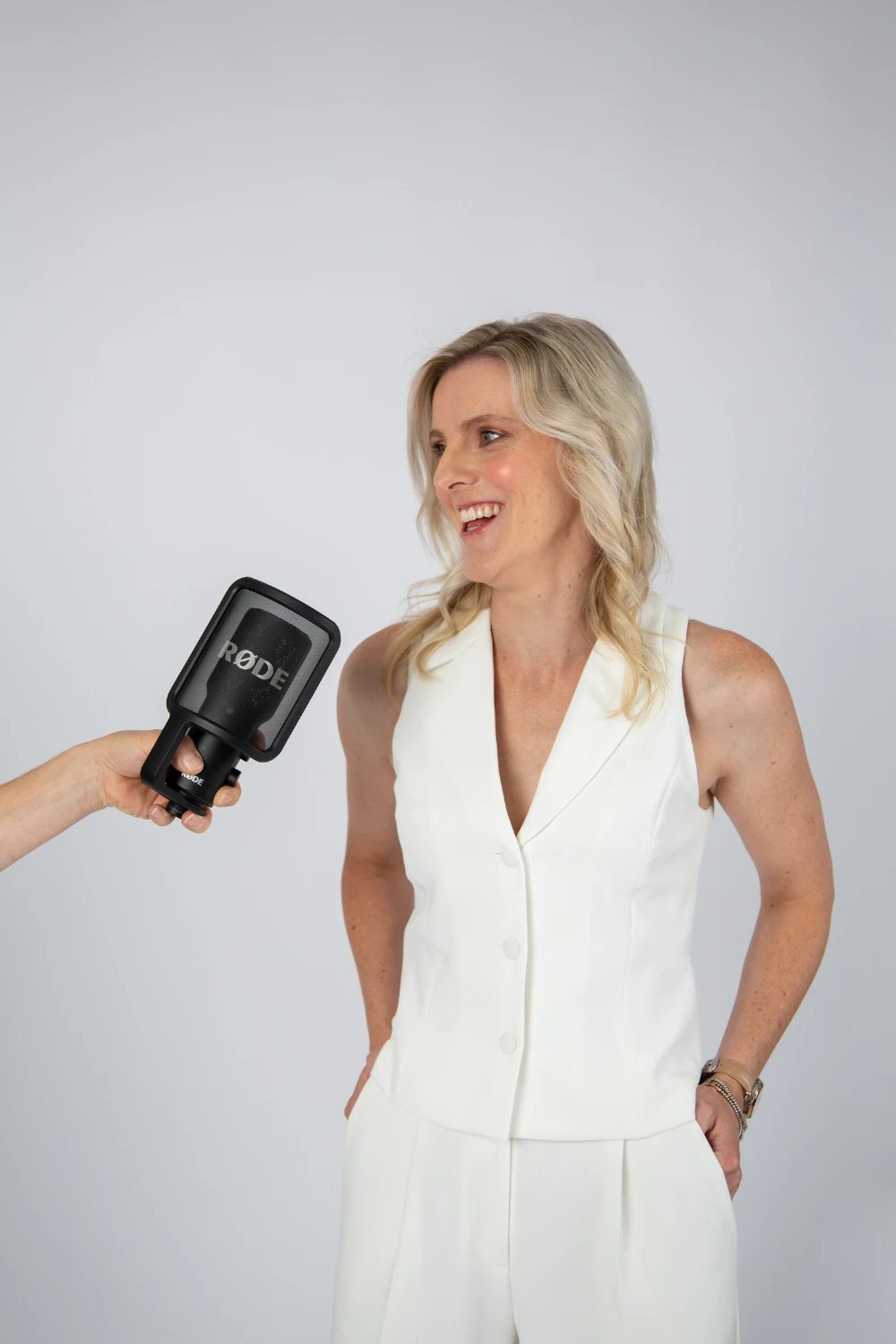
Tash Miller
Founder Unmuted Stories & Host of The 100 Stories Podcast
What started as a book for her three-year-old son, Archie, became a mission to capture 100 stories worth remembering. Created by Tash Miller, The 100 Stories Project goes beyond business and success to uncover the real people, experiences and defining moments behind them. Through honest conversations, we’re creating a collection of stories that connect people, inspire others and preserve the voices and lessons that deserve to be heard.
As seen in


Watch or listen
Explore our stories.
Emma & Susan Lyon
Set for School, Early Childhood & Primary Education Specialists
Is your child ready for school? Sisters Emma and Susan run Set for School, a small studio in Queens Park in Sydney’s eastern suburbs. They share why confidence, independence and emotional resilience matter just as much as reading and writing, and the simple things parents can do at home to help little ones get ready.
Read the transcript
Today's episode is a personal one. I have the pleasure of having Emma and Susan from Set for School here with me today. Thank you, ladies. Welcome to Performance Starts Within. Thank you. I feel like I'm the thorn between two roses here. I am actually really honoured to have you here today and I get to facilitate this interview with you because my son Archie is three and he's about to get into exactly where your children and your students are getting to, transitioning from daycare,
preschool, the age of four, into school. So all the questions are also curious ones for me to be able to talk to you. So thank you so much for being here. We're excited to help in any way we can. Yeah, amazing. I wanted to set the scene with you guys on tell me a little bit for those that may not know exactly what you do in your background. What is it that you do to help children get ready for school? So we have a small boutique studio in Queen's Park in Sydney's eastern suburbs.
We're sisters. So Susan... has early childhood background. I have primary school and early childhood background but am currently teaching in schools and we decided that there was a gap for students being ready for school and so we decided that we wanted to help as many students as possible and so here we are a couple of years down the track and loving our little studio and families that we've created. I love that and you've both got education in different spaces and from
my understanding you've got education in early childhood so what was that like for you? It was very interesting. There's been a big change over the years of how early childhood education is run. It's now a lot more play-based, which play-based is great, but there's not those intentional teaching moments as much, which is where we come in because we're able to provide that play-based space but have those intentional teaching moments to support the children and get them ready for
school. And I know even from my own experience with my little boy, he's been in daycare since he was nine months old, just purely out of circumstance, cost of living, you work, breakdown of a family, I'm a solid parent, so you have to do those things. And one of the things I am only conscious of now is sometimes we miss some of the milestones that they're meant to achieve because we just don't know what they're meant to be. Yes. um what is it that your experience is coming from
i guess early childhood teaching now into primary what are the key ones that we're finding that we're missing well i actually think that the expectations of the children when they get to school are a lot higher than what they used to be as well most children when they get to school now they need to know how to write their name A lot of them already know their letters and numbers. Whereas when we went to school, we got taught that at school. That's what we learned during kindergarten.
So there are some children that are missing those key skills. But along with that, it's the confidence skills, that social, emotional, which is really important, being able to regulate their emotions, understanding that they have to do hard things, tricky things, and it's not going to be easy. And that's where that confidence comes in, that they will give it a go. And I know confidence is a key word that we're probably going to talk a lot about today because
some of the misconceptions, I know that some of your parents have asked some questions for today, which is amazing, is the myth between readiness, like what is ready? Sometimes it's skill, sometimes it's milestone, but also some of it's confidence and emotional. Definitely. So people see the term school readiness and straight away they think, oh, children need to, they're tiger parents pushing their children to read and write and do things before they're ready. Yes,
that's it. of the things we do um but our main thing that we look at is the confidence building confidence in the children that come to us as well as building those social emotional skills learning how to play with others um interacting with children and teachers they need to know how to interact with adults as well and ask for help and also building that resilience as well um that things may not always go their way that they're able to deal with those big emotions in those group
settings with peers and other adults And I'm learning this actually. I've been teaching my son Archie Trouble at the board game. And I think I've shared this with you where we played Uno together. But Trouble specifically, he's now learning that I'm not letting him win. I am letting him lose so that he knows that he doesn't win every single time. But also his reaction is interesting. And I wonder how he would have learned that if we hadn't actually. play trouble
together and which is so true a lot of parents and adults out there quite often let the children always win so they're not learning those skills of the disappointment of losing like yes it's disappointing that you lose but oh how do we move on from this how do we build that resilience to go oh well next time old child like let's play again and maybe i'll win this time yes so that's a learned skill that they definitely need and the more practice the better Definitely. Yeah. And I
didn't know any of this as well. I think with most parents, we become parents and there's no, whilst there's books out there on how to parent, we are evolving so quickly. And so we're just going with, based on what we were taught or what we're told, how do we know what is actually going to work between, you know, helping them get ready? Yeah. Well. Anything can help them. So there's no set rules. There's no set guidelines saying you need to do A,
B, C and D and then they're ready for school. Every child is different, which means every activity. that you do with them should be different and tailored to the child. So things that you do at home would be building up their independence to do things. So getting dressed by themselves, yes, it takes a little bit longer, but often you need to give them that time and space to learn those skills. I know putting on shoes is a big one that used to get me because you could do it in two
minutes, but it takes them a good five, ten minutes to get those shoes on, but it's an important skill. that they need to learn and that's building resilience them learning how to put shoes on if they don't get it the first time they're going to may break down may throw a tantrum and then it's helping them navigate those emotions and move on from there yeah beautiful where did this all start because I know that you came from teaching primary and early education for yourself what made you
look at everything and start set for school um well I was a single parent as well. So I knew that I didn't want to stay in schools forever and Susan didn't want to stay in early childhood forever. And we just saw that little gap of some of the children that were coming to school, me especially working in schools, the children that were struggling that little bit. And it's sort of like, well, what's missing for them? What do they need to help them to feel
confident at school, to be able to get through school? And it wasn't just that academics. I know with my son, he suffered a lot. with separation anxiety and so that was another thing that we looked at when we were thinking about starting Set for School was how we can help those children and small group classes where they do have to leave mum or dad or their caregiver for that hour and a half definitely does help but it's short little stints. And I think it's also coming from early
childhood I have the passion for teaching but it's such a big group. Like you could have 20 children in one group. So you're not able to support those children and work with the individual children on their goals. Whereas having the small groups, we can see the growth of all of our children that we've had come through the studio. So smaller classrooms. And they get that one at one time. Today when I was on my way here, I ran into one of my families from today and she was
just saying, I just don't, don't. get the magic that you do she's like it's just magical what you and susan do she she was saying that her daughter is now like wants to sound out every word and that's not from us pushing them to read words that's from us doing the activities in a fun way that they think it's a game and that they want to do it themselves and building her confidence in wanting to learn those skills exactly Yeah. So working through that word confidence, what does that
mean for them to be ready in confidence for school? Because we know that there's certain milestones we need to hit academically to be ready with writing and numeracy. What about confidence? What is that? Confidence is being able to ask for help, to be able to walk into a classroom. And to walk up to a friend and say, do you want to play? It's building those resilient skills. All that falls into that confidence umbrella. Walk into the school gate and say
goodbye to mum and dad at the door. Being happy to walk into the classroom. Also, being able to look after their own belongings as well, taking pride in their belongings. um really important because when they're at school they have to look after their lunch box their drink bottle their bag um they also have to be able to follow those instructions so having the confidence to go oh i know what the teacher means i'm i know what i need to do and being able to do it not needing someone
there to guide them the whole way so confidence is a massive umbrella that a lot of things fall under um and it's not just that that academic but having the confidence helps with the academics because they're willing to give it a go and ask for the help if they need it. Yeah. So asking for help is really important. Obviously saying no, being able to say no to things when they're in certain situations. And I think coming from my background in policing, watching what that looks
like when children have that confidence that they can stand up and say no or ask for a parent and things like that. What do you mean by confidence in skills then? If they have the confidence to, I guess, do their buttons up in bits and pieces, how does that flow into? That then... into the fine motor skills so having the confidence to have a go at like undoing their lunch lunch boxes their drink bottles doing their zippers up on their bags um looking after their belongings is all
building those finger muscles there's fine motor muscles that then rolls into writing into drawing into playing with it with the children in the classroom so it's really important that those things are built up so then when it does come to the writing and the academics they're ready to give it a go So they're not going to throw their toys out of the bath, for example. Yes, exactly. And then from your side of things, watching them go from preschool into, I guess, school and now through
your program, what are the key things that you're actually seeing with children that are going through your program? A lot of the, it's the confidence and the separation anxiety we do notice a lot. So when they come to us, sometimes they go to preschool and even at preschool they have problems separating from mum or dad coming to us. They have problems for a few weeks and then the next few weeks they bound in. to our classroom, which is really great to see. So it's those small
steps that we take each week to build the confidence, yet again, to build their confidence up to go, okay, I've got this. I don't need mum or dad with me. I think that is one of the main things we see lots of, the fine motor. is another thing and i think that's due to parents unfortunately always being in a rush and doing things for their kids because it's easier than giving them the extra five minutes to put their shoes on to get dressed in the morning to help pack their bag so
they need those little moments in time to practice those skills And I also describe, I guess, as a compound effect. Like one thing, whilst it might be in a rush in one moment, if you do it over and over, then it becomes a bit of a habit over time and then they don't actually learn to develop it. That's it. And they don't want to give it a go. They think, oh no, mum puts my shoes on for me, so I'm just going to take them out to mum and mum will always do them. Whereas if they
have that time to be able to practice, then they'll continue to learn and develop those skills. And I'm looking at it from, and I know so many mothers would be like this as well, or parents would be, it's really hard to parent. And it's really hard to say no to a child who then has a meltdown or a tantrum or has a big emotion reaction and then almost triggers yourself as a parent as well. And you then have to regulate your child whilst regulating yourself. Regulating yourself,
definitely. How do we keep doing that so that we can be? Not so harsh with our children but consistent. I think open conversation. Like I think sometimes we don't give credit to children that they are very clever and often some parents do not, I wouldn't say talk down, but they don't talk to them using big words. They're scared of using big words with kids and children can understand big words if you explain it to them. So labelling feelings, labelling
what's happening often helps then. them overcome those times as well. So I can see you're frustrated. I can see you're crying and you're getting angry, but we need to get this done. Let's do it together this time and building it up from there. How about from you? No, it's definitely labelling those emotions. That's a big one that I was going to mention as well. By labelling them, the children then know that it's okay to feel frustrated. It's okay to feel sad,
to feel angry. But we do then also need to work out a way to work through them and to get... task done. Yeah. Yeah. And we need to feel these feelings. We need to learn how to sit in those feelings as well instead of mum fixing them or dad fixing them. That's how do we get through it ourselves that builds that resilience up too. Yeah. And almost teaching ourselves, parenting ourselves. Parenting ourselves. I still have to do it every day with my two. I've got
older kids and they frustrate me but I learn to take that big breath and count to ten and then we move on. So, yeah, it's definitely a learnt thing that children need guidance from their parents to overcome and to learn. I definitely think that my sadarchy is the biggest lesson in parenting myself. Not that, you know... we've grown up and anything was done wrong we've just evolved and the way that we see the world and the way we need to behave and react and turn up is very different and
so I'm very much learning to regulate myself a lot with him as well and find that I'm almost having petty drop moments in teaching moments that I didn't realize but only when I have paused not during busy times as you described so thinking of Having a lot of compassion for our parents out there and being that it is so hard and knowing that Archie is now at that age where we're thinking of preschools for next year and school readiness and he'll go to school in 2028, so in less than 18
months' time, what kind of things should I be looking for now for him so that I can keep an eye on that he's actually ready? As we've said, the confidence and social-emotional. regulation as well. So is he able to label his feelings if he's feeling frustrated or if he's sad and how he works through those feelings is definitely a big one. Also looking how he interacts with his peers. Can he go up to somebody and say, do you want to play with me or can I play? Learning that sort of
thing. You're doing a great job with your trouble games and your, you know, games because that's all turn taking. And at school, there's lots of turn taking that they need to be able to do and learning. I have to wait my turn. I can't talk all the time. I have to listen and respond to my peers as well. So definitely that's a big one. What else do you think, Suze? I was going to say the confidence as well, the resilience, those independent skills to be able to do things on his own and
to ask for help when he needs the help, but to also give things a go. Like to have that confidence to give it a go and then be like, hang on, mum, I need some help to do this. Yeah, beautiful. I think he's quite a smart kid. And you've met my little boy. We've had school together. And we play Una at dinner. It's my way of teaching him how to interact with people. And I'm a solid parent. And so he is... that age one i think age appropriately having those confidence challenges
but also that transition between being with me all the time going to visit his dad is one of those things and so whilst i'm keeping an eye on milestones he's able to put his shoes on and has got a zipper that he can do up not quite the buttons he still takes it off like he's the hulk but um we're getting there um but definitely the confidence so what would things what kind of things could we do to help boost confidence so that he is quite independent and able to keep going when things
get really hard. I think trying tricky tasks like puzzles are a great one because puzzles are hard. And you can extend them with puzzles because there are puzzles that go up to a thousand pieces. Not that I'm saying go out and get a thousand piece puzzle. I'm going to get a 5,000 piece. But you can start small with the puzzles and do them together and then slowly you take yourself out. Also Lego building is a great one where they have to follow the instructions but they're doing it
themselves so that's building their confidence. get something in the end that they've built themselves and they can take pride in that um so that's a great one too i know that helped with my son like he loves the lego building um and he like the pride that he shows when he finishes like a definitely a tricky one by himself um and that just builds his confidence as well i think so like you can do it in a fun way doesn't have to be all about or learning all the time um but even
confidence going to a park where there's a bigger slide and saying, all right, I reckon we can have a go at this. Let's do it together first and then, oh, how about you go first and then I go or building the confidence in those scary tasks as well. So it's the hard things with almost like a reward at the other side? Yeah, you could use a reward but you don't. It's just lots of praise of accomplishment. Yeah. That goes with it. Yeah, if you're making, yeah, if you celebrate whatever
he's done, like it doesn't always have to be a reward at the end or a bit of bribery at the end, like we're not saying bribe your child because that gets very expensive. But even just making a big deal about, oh, you did that by yourself. Oh, my goodness, I'm so proud. Are you proud of yourself? Acknowledge those feelings that he'll be having, that he is proud, that he did achieve it by himself. Yeah. So then he's showing that confidence in himself and, yeah.
Yeah, even saying, I can see that big smile on your face. You must be proud of yourself. yeah so labeling that as well love that yeah what other things do you think for confidence wise say attachment so a lot of parents have described um i put a poll out to social media on some of the mums pages and one of the things that they came up was attachment as well um so whether they're clingy or they're not wanting to let go of mum or dad um what kind of things could help confidence
wise that way attachment is a tricky one um especially with different family dynamics and things like that um and it's Building that trust within the child as well, that they know that you're going to come back. You'll always be back to pick them up. Because the clinginess often comes from, will mum be back to pick me up? What time will she be back? So it's having that trust with your child, setting those little routines as well. I know a lot of parents will often draw a little love
heart on their child's hand and on their hand as well. So whenever they're thinking of them during the day or if they're sad, they can touch the love heart and know that. their mum or dad is thinking of them as well it's kind of like that virtual hug um so there are things that you can do to then help with those clinginess or that and that attachment and that separation i know also some some children might wear a watch and the parents will show where where the watch hands sit when
it's time to be picked up so they have something visual as well that they can see that's for quite children that do find the timing really hard and they know um I know during my group sessions if children are like when's mommy coming I miss mom I I state exactly what we're doing we've got four more things to do and then mom's here so then we can count down until mom mom or dad comes so that often helps as well and they know they get their scratch and sniff stickers at the end of the
lesson so when you say it's sticker time they know that it's time for mom or dad to pick up and often by then they're like oh but we're done We have to go home now. So that's when they're getting comfortable and they're ready to keep going. And the attachment also comes back to, I don't know if you've heard of Circle of Security, and that's where you're their safe space. So they're always going to come back to that safe space. So it's then in the daycare or at Set for
School, they find that safe space in myself or Emma, whichever teacher's taking the class or their teacher at daycare. And then we're able to support them through those times as well. They always say safe space always with your parents, right? Yes. That's where they – I don't want to use the word muck up, but they – But they do. They let their emotions out. Everything releases when they see you. Because they hold it all together when you're not there and then once you're there it's –
So it's almost like a compliment that if the child's like, you know, behaves themselves for grandma or nona in my case and is beautiful all day and then comes home and has big feelings. It's just that he's comfortable. He loves you the most. Emma's son's the same. Yeah, definitely. Yeah, but it's definitely Susan and I take the time to get to know each child in our class as well and build that relationship with them. We like to try and find out what. they like
what their interests are so we have a few of our boys love transformers so we went and bought some transformers so then they have those toys there to help them settle into the class or after they've done some activities they often ask for those toys down so we try and get to know each individual child as well to make them feel safe and secure at set for school yeah beautiful talking about what you have seen going into primary as well what would be something that is very well I guess,
experienced by some of the teachers if they haven't been set up for success? Often it's the emotional regulation. So it's them not being able to regulate their emotions for the entire school day. So the entire school day is long. Like they're on, they have to be on ball for the whole day, on their best behaviour for the whole day. And if they haven't had any of that experience, they're the ones that crumble. especially on the playground when it's the big open space. You often notice
during mat times as well, the children that will want to touch people or can't sit up properly on the mat and can't focus and take turns. They're the ones that then struggle to listen and to take in the information that's being taught as well. But definitely the social emotional is our big one that we see. And they quite often can't deal in... group situations as well so when they're out on the playground they don't know how to interact with their peers they want the game to go their way
and only their way rather than listening to others ideas and playing together as a group so it's almost been back back in covert that you've been at home all day and then we forget how to interact with people or we just haven't been taught how to interact with people and there's a movie about this yeah yeah and it's like i know that a lot of parents like oh we could take them to play group they do swimming they do soccer but all those activities their parent is there with them. So that
was one of the reasons why Set for School was, no, it's a drop and go session. So if they're not at preschool or daycare, they're still having that time where mum or dad isn't with them during that hour and a half, that it is like a school situation or a daycare situation where they are there with the teacher. So I think that helps as well. um learning that mum and dad aren't going to be with them at school that they do have to navigate those feelings by themselves as well and then
they also have to listen to another adult the teacher's there to give the directions and to support them and help them and guide them um that it's not going to be their mum or dad they're helping them all the time yeah yeah yeah beautiful i think i might um have a look at some of the questions that we've got from some of our if you're up for that so some of your students um sorry your students parents have asked some questions from set for school but also uh i did a poll like i said
through facebook some of the mums groups in sydney and central coast and they've given some responses and so i'm going to share some of them with you uh what simple routines at home make the biggest difference to school success well i think a lot of it does come down to as we mentioned before giving them that independence in their self-help tasks so packing their bags getting themselves dressed opening lunch boxes putting shoes on all those things set them up for the
success when they go off to school because they are able to walk into the door and they know to put their bags on the hook they know how to open their bag to get their lunch box set out um they're not having to ask for help for those small tasks throughout the day so they've got that confidence to be able to then walk into the classroom and be like yep i can do this part yep and adding to that i know as a teacher often on playground duty getting packets of food that you have to open
yogurt that you have to open which i don't mind i'm more than happy to help but if they're able to do it themselves that gives them that more more confidence that I've got this I don't need to ask for help teachers are always there to help but it just helps them be able to be more independent at school as well so practicing those skills and I guess also having those group activities where they're able to interact with other children so then when they are do go out on the playground then
they're able to interact with peers and make new friends because they may go to a school where they don't know anyone so they need to then start forming new friendships and so yeah Having those extracurricular activities then allows them to form friendships and know how to interact with other people. That's actually a really good tip because Archie will go to a school that no one in his current preschool daycare will probably go to, mainly because of school catchments. He'll probably
go to a public school. And so recreational activities that are outside of school will be great for friendships and also for mums and dads, which is a really good tip, so thank you. Yeah. Yeah, and I know that at the school I work with, they often try and organise like a play group or a meet-up before school starts. So that's a good way as well if you find friends that are going to the same school. Meeting up before school actually starts for little plays at parks. I
know that helped with my daughter and she's still best friends with the little girl that we met how many years ago now? She's in year four. And they're still besties because I did a few play dates before they started school because she didn't know anybody going to the school. that helps them with their confidence they may not stay friends but it's just that familiar face that they see in the playground or see in the classroom um that then will help ease the nerves a little bit love
that for you yeah following up from that question i'm just going to add my own personal if that's okay in regards to routine and i'm sure many parents are like this as well it's busy Yes. We're working. I'm a solo parent. Not everyone's a solo parent. But if you've got both parents working, things are very busy. How do we maintain that routine? Like what's perfect world here so we can get all of our milestones? Top tip, do lunch boxes in the nighttime. That's coming from a
parent. somebody that hates lunch boxes too. Lunch boxes in the night time, getting the uniforms ready the night before, pack the bag as much as you can as well. So then the morning's nice and smooth. All you have to do in the morning is get dressed, breakfast, brush teeth, and then hopefully out the door, have a little play to calm the nerves and then out the door. We do also recommend before the first day doing a few school runs.
Even practicing, getting up, putting your uniform, packing your bag, going to school at the time that they'd go to school to see how long it takes to see so that they get used to the routine as well, which is a great tip. So it's not that first day that you're doing the brand new routine. Yeah, beautiful. And it is, yes, as Emma said, it's being organized and although it eats into your downtime of an evening, but if you're able to get those little jobs done, then it just makes the
morning run so much more smoother for you. Because you want a smooth morning. You don't want a morning where you're shouting and stressed and because it makes them shout, shouting and stressed. Yeah. Yes. I'm hearing my mother ring in my ear at the moment. Well, she was a teacher too, wasn't she? She teaches year three. But she wasn't a teacher. She was just becoming a teacher. She was early education whilst we were young. And she was a solid parent from when I was like 11
and my siblings were younger. They were eight and five. And she very much, she still says that you need to organise the night before and, you know, you don't wake up with a messy house. You have everything packed away the night before because then everything kind of works really well the next morning. And then you realise you have children and you're like. Oh, I now know, Mum. Thank you, Mum, for lessons that are ringing for years. I've got some more questions for you. There are so
many important skills that need to be developed before school. Some parents only see reading and writing. What are some of the other skills that they need before they go to school? Apart from that, we did kind of answer this already. But what's missing? So we did mention the confidence, the independence, the resilience. all of those are very important um and then you've also got your fine motor your fine motor is a big one because that's what's going to help them to
develop their finger strength which then helps them with their riding which leads into everyday life like if they can do up buttons if they can open their yogurt container all those are fine motor skills that they need to build on so when people hear fine motor they go oh writing that's them holding a pencil it's not just holding a pencil it's all the other skills around holding the pencil holding the pencil comes last so it's being able to cut it's being able to use tongs being
able to spray a spray bottle all those things that you don't think of that help the those little hands build muscles to then be ready for writing which we do a lot of that in our school readiness classes before they even pick up a pen to write So it's almost like if you keep doing everything for them, they're not going to actually, I didn't even think about, build that strength in those fingers to be able to pick things up. It's not like they're going rock climbing, but basic skills
that you need for life. Yep. And because everything is so technology-based now, like children are on iPhones and iPads so early, they're actually not developing those muscles in their fingers to then be able to hold a pencil and then they get up to year three where the nap plan starts and things like that. And they need writing stamina to be able to write for... a nap plan exam which takes a they're writing for almost 40 minutes so 40 minutes of solid writing takes a lot of hand
strength i know my hands would be sore after that yeah me too yeah yeah yeah so it's definitely building all those other skills around it before you even look at writing so yeah it's it's important to build them at home because you can't just do that we can't do it in an hour and a half session so that's like something that we um make sure our parents are working on at home as well and it's easy everyday things you could do like play-doh um usually help getting them to help hang
the washing out we picked yeah um spray bottles spray bottles we we love spray bottles at set for school water the plants with spray bottles cut the grass with some scissors that takes a long time it's a great activity too um but writing with big chunky chalk um so drawing with big chunky chalk um we have yeah cutting Briding, yep. Lots of plasticine, lots of different things that we do at Set for School. So some of our, you may see some of our
posts that we are like, what are they doing with that? It's lots of headband, hair elastics pulling over different things. I could be using marbles for different things and all that is the fine motor skills that we're working on. Is it normal? for your child to regress have tantrums leading up to school definitely asking for a friend for a friend that has the name Tash too yes yes we've met on Facebook no it's definitely normal for children to regress before starting school or for any big
change in their life um it's the unknown like how do we feel when we're walking into a situation that we don't know what's going to happen we get nervous and that's how they're feeling as well but they don't know how to necessarily necessarily express those emotions so therefore they do regress and they will have the tantrums they will become extra clingy um you know often that first term of kindergarten when they've gone five days and then by the afternoon they are just exhausted so most
afternoons they have meltdowns so that's totally normal because their little brain has been working the whole day they've kept it together the whole day they come home to their safe space as we were talking about and everything floods out and comes out doesn't mean they've had a bad day it just means they've held it together the whole day and now it's like the the release happens and they build up their strength for that too so that's just building up that resilience of having to manage
emotions all day yeah yeah and i'm even noticing just how big life is this time of year um so when we get to the middle time of the year even more so yes um they need holidays just as much as us yeah yeah and then ramps up towards christmas so it's always we're always chasing something yeah yeah beautiful um a couple more questions and then i have a personal one for you um one of the biggest myths about school readiness that you've heard um i guess some of the biggest myths is that
it's all about academics getting getting my child to read i want my child to read before school that's not what we do so if that's what you want we're not the place for you um because it's not it's not about the academics it's about all the other things we've discussed today the confidence that independence the resilience the fine motor skills they all can't play a big part and the academics comes once they're ready to learn once they've got those skills and it comes easy yeah
Once they have all those other skills, it just clicks and that's when you know they're confident enough to learn it and you see them pick it up really easy, which is great to see. Yeah, beautiful. What is the one thing every parent wished that they knew before their child started school? Oh, that's a good one. We have a lot of parents that go, I wish I found you earlier. That's our most common thing. That is the most common thing we get from
parents, especially the parents that start halfway through the year with us or only do one term with us. I wish I found you earlier is one of the most common things. The other thing is that don't worry about the academics so much. Yes, it's good if they know how to write their name and know the names and sounds of the letters, but that will come if they have the confidence and those social -emotional skills. That's the most important for starting school. And they have that willingness
that they want to learn. Yeah. So if they're willing to learn, they're going to pick up all those skills when they go to kindy. And I think that's what parents see from coming into SET for School, that we give the children the time to be able to grow at their own pace and we extend them where they need to be extended. Yeah. So yes, we do have children that can read by the end of the year, but that's not our goal. So our goal is to make confident children ready for school. So coming to
you too late, so when's a good time? It would be a year before you start school because our program is built on throughout the year. We use a literacy program and a handwriting program and it's all done through mat time games and fun activities, but we build on it throughout the year. So the children that come halfway through the year pick up where we're up to. We don't backtrack because there's children that start with us in the beginning of the year. We also have kids that come two
years before, which we see the most progress with, of course. But, yeah, so a year and a half to two years, you see the most progress but we definitely recommend the year so you get the most out of our program and your child gets the most out of it. You can see the children who start halfway through the year or that last term, they are further behind than the children who have been with us for the year or the year and a half because they've got those
foundations there. They've got those skills already starting to build whereas the other ones are just coming in and starting from scratch. So more time, more consistency builds confidence over time as well. Yes, definitely. Confidence can't be built overnight. Confidence does take time to build. Resilience takes the time to build as well. Yeah, beautiful. Thank you for this conversation. I, again, it's personal as well, which is lovely, which is why it's also so easy to
talk about because I know many parents and I know myself sometimes question ourselves on are we doing the right thing? Are we going to stuff them up? Like how can we make sure that they're, despite whatever's happening in life, are able to? become good good humans well-rounded humans that um can lose at trouble um but my my last question I'm going to ask you both individually because I would love an individual answer for you and I haven't told you that I'm asking this
question yet but if you imagine that you didn't have set for school anymore and you had an opportunity to have a conversation and leave some of the parents with a really really key message that you would love to share with them what would that be it would be oh that's a that's a deep one um It would be to trust your instincts. I think as parents, I know you said there's no handbook, we're all learning, but you know what your child needs deep down and I think it's trust your
instincts that's coming from a mum as well. Like you know your child inside and out. If you think there's something wrong or they're not progressing like you think they should be or you think that they're going to struggle at school, give them the support they need and reach out to others around you. It takes a village to raise a child, doesn't it? So reach out to friends, reach out to family to help you in any way that you can. But your instincts are there and you're doing the best for
your child, definitely. Beautiful. Thank you. What about you? Mine was similar. Sure, sure. She took your answer. You did take my answer. Mine was that you know your child. Like you know your child the best. And while you bring your child to. myself or emma to a daycare to a teacher they only see them for such a short amount of time you are with your child all the time so you know what they need you know what's best for them so as emma said trust your instincts
you you know them inside out Love that. And, yeah, my advice for parents is, yes, you are amazing and doing so well. And I absolutely love having conversations with you. I'm going to pop a link in our show notes because I believe you offer free trials for people to come over to you. And we are always happy to help. Like we have people DM us on Instagram or email us and we will share our advice. Like we don't expect people to always sign
up to our classes. Like we want people to because we believe in what we do and we see the outcomes. But we just want every child to get the help they need. And have that best start for going to school so if we can help in any way. Yep, send us an email. Yep. If you have a question, happy to answer. Amazing. You'll get my DMs. That's okay. Thanks, ladies. This is Tash again. Yeah, it's me asking for a friend. Thank you so much for joining me today. Thank you. Thanks for having us. Thank
you.
Damian Jones
Pumped Plumbing
Damian grew up watching his parents work themselves into the ground running restaurants and swore business wasn’t for him. Then, with a second baby on the way and a new house, he left his full-time job to start Pumped Plumbing. He talks about building a team that feels like family, learning there are more than three emotions, and growing a million-dollar business while still showing up for his kids.
Read the transcript
From the outside people think I'm kicking goals but there is a lot of hidden stress behind everything that goes on. My parents had restaurants grow like my whole life I was growing up and watching them kind of burn themselves to the ground doing the hours. Business was something I never personally wanted to do but I said babe I'm leaving my full-time job and I'm gonna start this business because if I didn't do it then I don't think I'd ever would have. When I first started my
apprenticeship like you're a man like you've got to suppress your emotions you gotta be a blokey bloke you gotta do this and in the last 12 months i've started seeing the psychologist to actually help me understand my emotions because i only thought there were three emotions angry sad and happy but there's so many more to that you hit a million this year in business stop overthinking things and just like just give it a go if you're young you've literally got nothing to fail So we're going
to do things a little bit different today. Normally this is our podcast called Performance Starts Within, but we're calling it Shit Happens this week because we have a special guest, Damian from Pumped Plumbing, somebody I've met recently in the last couple of months. And honestly, one of the best guys that I think I can have a conversation with, not to, you know, he's paid to be here guys. But mainly because I wanted to have a really good chat about business, talk to other people in BNI
and business. And also you are somebody that is like kicking goals in what you're doing with both family and also with what you're doing. So I really want to welcome Damian to our podcast today. No, I appreciate that. I wouldn't say kicking goals. I mean, it's hard. Like I think sometimes I don't slow down to realize what is actually going on. So it is nice to hear that from the outside, people think I'm kicking goals, but there is a lot of
hidden stress behind everything that goes on. So thank you for that. You're welcome. And absolutely true. And I think we've had a conversation already coming into studio today where you made a comment of what's happening in my business and we are unaware of what happens on the inside unless we actually have conversations about it. And so I love that's what we're going to be doing today as well. Yeah. I'm excited. I'm excited. First podcast. It's taking my virginity from
my podcast. And we're calling it Shit Happens. So watch this space. Damian's going to be having a podcast called Shit Happens where we can just talk shit all day. Exactly right. And the reason that obviously we're going to call it Shit Happens is because you're in plumbing, which you're not somebody I would normally have on a podcast or a guest. But before we get into what you do, I would love to know who is Damian outside of Pumped Plumbing? I am very big on family.
I was brought up in very close family values and I hold that very closely to my heart. I've got a beautiful fiance who we're about to get married in September. And then I've got, thank you. And then we've got three beautiful children, nine, four, and two. Wow. And they are my everyday driver behind my business. And yeah, that's my family. And then like my hobbies outside of that, like I try and go to the gym. That's really just to take
my mind off a lot of things that's going on. It just lets me reset and stay focused on what I need to be doing. Yeah, amazing. And then what kind of got you into this in the first place? I know I asked this question before, but you look like you're kicking goals in all sorts of things. I follow you on socials. I really love watching what you have going on because you're really real and authentic in what you show up doing. But where did this even all start? Were you in business?
Did you want to get in business? Didn't even, my parents, but my parents had restaurants grow, like my whole life I was growing up and watching them kind of burn themselves to the ground during the hours, like business was something I never personally wanted to do. I think it put like a very sour taste in my mouth. And like, like mum did her absolute best to raise us as children,
but like we didn't have a lot of quality time with our family. So like our kids were, well, my siblings, I should say, like we were all very close raising each other, being there for each other. And we're still like that today, which is so nice. But I was actually at a company called Daracon and one of my mates left who started his own business. And he reached out to me and said, like, you're a plumber. I'm looking for a plumber.
Like, can you come and help us? I'm starting my own building company. Would you be interested to come and start? And I was like, oh, I'm probably not in the best position to do that, but I'll come and, like, help you guys get started on the jobs. And that slowly turned, like, all my weekends into his work. And then I slowly got more and more work. I was like, oh, I need to do something from this. But at the time, I... Partner was like,
we were just about to have our second child. We just brought our first house. So it was a really horrible time to do it. And I turned around and I said, babe, I'm leaving my full-time job and I'm going to start this business. But I was so grateful because she's backed me ever since. And I am grateful for my mate who... forced me to start my business and he's been a very good leader in teaching me and showing me how to run a business. So it's been good. Yeah. Wow. That leap.
And what kind of gave you the courage to jump even with the uncertainty of coming from a full-time job into something that you don't know? Like you knew how to plumb, but did you have a business background as well? I had no. business background whatsoever I think uh I've become very impulsive whether that's ADHD or who knows what it is I don't think a lot of the times I'm doing stuff but I'll figure it out later down the track so that's why I made the jump because if I didn't do it
then I don't think I'd ever would have yeah amazing and how's it going now I love it I really really love it it's something like as you're saying like I I love doing the social media side of it because it's like really authentic I get to like be myself on camera and like I'm not worried about what anyone else says because like to me you may reach 20,000 30,000 whatever it may be but at the end of the day who really cares what other people think and The clients that I will bring from
social media, the people who I want to be working with because they know me for my personality and understand my business a lot better. So it takes a lot of the friction out of like having that trust between you and the customer. So yeah, no, I love being in business and I don't see myself ever moving away from business. Yeah, I don't see myself ever moving away from business. I see myself coming off the tools. And being like a lot more of a leader in my business and trying
to push my business to grow. But I'm very lucky for the team we have. I've got my right hand man, Josh, who has been the best hire I have ever done because he really supports. my family and I in everything we do together. So yeah. Love that. Yeah. And it's very true. It's what we teach a lot in our workshops and with our clients as well around what you put out in your socials, you'll attract the same back because people are aligned and see your values and they
see themselves in what you do. And so rather than focusing on the virality of content and saying, I want to reach millions of people, it's like. You want to put out who you truly are and what you believe and the work that you do. And you will naturally attract those people that want to do business with you back. And from what it sounds like as well, when you're hiring, it's also helpful. Yeah, massively. I'm really shocked with what social media can do for hiring.
Like I've spoken to you plenty of times about this before. Like whenever I put up a post on social media saying like we're looking for staff. the amount of response and like really good applicants that I receive from that is crazy. I've never even gone to another platform to look for applicants. But I've got other people who are like business mates who are on Seek and they're paying thousands of dollars to try and find this right applicant. I'm like, you've got to get on social media. It is
awkward to begin with, but it is game changing for businesses. Business are being driven towards with like AI and everything. I think social media lets you separate that authenticity. from AI and that will help you find people that you're actually looking for. Yeah, definitely. And also build that trust now. And we know that AI is getting pretty big. It's going to be the future where we're not going to know
what's real and what's not real as well. Like I did that presentation a couple of weeks ago where I showed myself and my AI generator boyfriend guys. And I asked the group, which one's real? And it looked pretty legitimate. Imagine if I just popped that on social media, no one would actually know any different. And so being able to have a bit of raw and real stuff on there, I think is just going to cut through straight away to who you are and what you do and be a bit more
trusting and believable. Yeah, that is so true. Like, yeah, that is a really crazy perspective to like, like, yeah, the unknown with AI and not knowing who to believe and what to believe is definitely going to allow your business to stand out from. other people if you're being authentic oh for sure yeah yeah and then so how do you do that with your team because you've got yourself is it ryan's your right hand man josh is josh is our right hand man so i've got three tradesmen at the
moment and one apprentice so i've got josh riley and sunny and then i've got jai our apprentice and like we all have like we obviously we have our group chats but we all like get along as family like I believe I want my crew to be a family. Some people think I should divide that as a business owner so they think I'm this business owner and they see me as their boss, but I'm not the type of person who want to be like that. I want to be known as a family person. I want my team coming to my son's
third birthday or, like, when they get married. Like, I want my team to be a part of my family. And, like... business is their business too. Like I don't want me to be taking all the profit. I want to be giving back to my team members as well because I've learned in business that it's not a one-man band. Like you're not doing this by yourself. You need to have people in your corner to really help you grow your business. Yeah, beautiful. And so how do you maintain such good,
I guess, brotherhood or culture as some people describe as to keep it like a family? There's a lot of bullshit talk. There's a lot, like, I don't know. Like, we're just, like, blokes just talking shit to each other. And, like, that's what I'm going back to social media. Like, I've... These have come, these are people I've hired from social media because they follow me for my personality and it makes it a lot easier for me to get along with. Like there's no real
clash because we all get along with each other because they knew what they were getting to start with. I did the interview with them and we got on like a house on fire and nothing's ever changed since then. So it's all a kind of gut feeling in a way. I think so, yeah, 100%. I think like you've always got to go with your gut. I mean like. I'm very impulsive. So I don't know what that gut feeling is. Yeah. Drive, impulse, ADHD, all of the above. Yeah,
probably. Literally, literally. So no, like, and we all get, like, we all specialize in our own different little things in plumbing and like, we rely on each other. Like they teach me things in plumbing because there's such a wide range of skill in plumbing. Like you're not going to know everything and you've got to be open ears to everyone. Cause there's so many different ways to do things. So we all just listen to each other. We'll teach each other. And like, that's why our first
year, Jai, he's like really excelling in plumbing. Like I've never seen an apprentice do as much as him at 16, 17 years of age now. And he's just killing it. Yeah. Amazing. Do you think that's the secret to having a good business is always been open to learn from even your people? I think as a leader that I think a good leader knows how to listen and understands how to separate
from what to take on and whatnot. I think like other people's opinions matter a lot because you're not like an opinion comes from a place of feelings. So if someone's not understanding that opinion. There's always going to be a little bit of tension between that person. So I think like, yeah, like you've really got to listen to your workers. And I really believe the market that we're in today as business owner is that employees run the market for employers.
Yeah. Yeah, definitely. Let's talk about the shit stuff in business because I know that you're an open book and you openly talk about how things are in the back end. What are some of the things that you can share for other gents, other tradies, other apprentices wanting to start their own business? It's not rainbows and butterflies. There's a lot of stress and there's a lot of learning that you've got to be open to. There's going to be a lot of times where you put your money into the
wrong place, where you wish you had enough. There's going to be... I'm a massive people pleaser. The biggest thing for me is I'm not going to please everyone. Saying no to jobs, that's been really hard for me. God, it's just constantly, like you're never at one stable emotion, I suppose, and you really need like a stronger half to be doing it with.
and just you need to have people in your corner that you can bounce ideas back and forth to and find like someone you can really talk to about how you're feeling and they're not going to judge you for what you're thinking. Is that why you joined BNI as well, to have those chats with other people that kind of get it? Yeah, well, that's literally why I joined BNI was to educate myself further in business and to... gain a better understanding of like
businesses and obviously just to open up my networking and it's been unreal for me because it's grown me as a person even to be doing this right now like in school I was such a shit talker I was wobbly all the time yeah and now it's just like it's changed me as a person for sure it's really cool yeah I love that and I love what you're talking about with learning as well because I know my three-year-old is almost the biggest teacher for me and he's going through learning emotions and
learning regulation and one of the things I especially notice in business is when we're stressed we're not focused we're if we're dysregulated we're highly impulsive in our decisions as well and so some of the really important lessons I've made in business is actually learning how to regulate myself because the longer I'm dysregulated in business, the more mistakes I make or the more decisions that cost a lot of money as well, or you lose people because you can't handle situations
really well. And so... like learning from other team members learning from our own family sometimes is um a pretty good lesson in business yeah it's funny it's funny you say that because I suppose as a tradie and like when I first started my apprenticeship like you're a man like you've got to suppress your emotions and like you're not allowed to feel like that like you've got to you've got to be like this you've got to be a blokey bloke you gotta do this and it's literally like In the
last 12 months, I've started seeing a psychologist to actually help me understand my emotions because I only thought there were three emotions, angry, sad and happy. But there's so many more to that. And when you can start to understand what emotions you're feeling, like I personally think it's grown me as a parent. But then again, like as a leader, because then as I was saying before, like you can understand people's opinions
and like really grasp what emotions actually are. And I think that has changed me as a person massively is like getting help for something that I'm not. actually understanding how I'm meant to be feeling which is so great and such a good lesson for other people as well and other men as well because I see both sides I've come from a policing industry where nobody shares emotions and you just get back on the horse you pretend it didn't exist all the way through to you know our group
and community so many people see psychologists or counsellors or mindset or just business consultants or coaches in general because Sometimes having a different perspective is helpful. And I describe it as servicing your car. I see someone every two weeks because for me to maintain my capacity, solo parenting, business owner, the stresses in the world, but also things of parenting that come up that. ad hoc, like could something, something could happen at daycare that I
need to talk about. Having that in the calendar is so helpful. And I find I'm such a better mother and I can take more messy action because of that, because I have somebody that I can kind of get it all out to and have some understanding created around it. How good do you feel walking out those sessions too? Like after you leave the room with the person, whoever it may be, you're unloading, like, it's just like, a fucking weight off your shoulder and you just like,
I always, every time I leave that door, I've always got the biggest smile on my face. I'm like, I'm going to go fucking conquer the world. Like I can do anything. Yeah. Yeah. There's always the. Having to put it in the calendar though, I think. It's funny, driving to studio today, I got a phone call from mine confirming my appointment for next week and I forgot that I had it. I was like, I have so much stuff I need to do in business. I'm like, do I just cancel it or whatever?
And I go, no, because I know what will feel. It's like going to the gym. You know, you feel better afterwards. You don't want to do it before. And it's going to make such a difference by doing it rather than putting it off and avoiding it and then having it as a reactive part of life. Yeah, definitely. I definitely agree. So going to see somebody, making sure you turn up to BNI and involve yourself in more of your business, how are you with your family and maintaining capacity
with a business owner and three kids and an almost wife? I would like to think I'm doing a pretty good job. There's always room for improvement in family and like it's always very chaotic and sometimes you just get into a rhythm of doing things. And, like, sometimes you're not appreciating being with your kids and just actually slowing down. But I think, like, at the moment, like, I'm in this period where,
like, I'm trying to stop doing things on the weekend and my partner and I, we take the time to take the kids out and just, like, be really present with our kids. And, like, you can see it works because, like, they just, they love it and, like, Yeah, there is nothing more rewarding than being a dad and, like, just a parent. I just, yeah, I cannot. I love it so, so much. So,
so much. And I know that you said before that's why you started your business, to be able to have that flexibility, to have those moments with them and be a bit more present. And if you don't mind me sharing, you hit a million this year in your business. So it's not like you're doing, you know, sense in your business. You're doing really well. You've got a really good team and also still managing a family and your fiance is in emergency services. Yeah, she's a paramedic,
yeah. Yeah. So you're both navigating parenting together as a team, which is so nice to see. Yeah, it's taken a lot, obviously. There's a lot of ups and downs, but this is where it's beneficial, just talking to each other and understanding each other. Sometimes it's not always that happy thing, but we can come together after it and talk to each other about it. We try and set like our Sundays where we sit down and plan our week out for where I need to be to
help out with the kids and then where her days are and just like what we need each other from each other that week and where we can improve and just like really communicate on our relationship, which makes it a lot easier throughout the week. So when you're going through what feel like hell sometimes, you know you've got a plan there, you've got a schedule. Like you're in it together. So, yeah, I love my family. I love my partner. And,
yeah, it's really, really cool. It works. It's a bit clunky at some times, but it works. Aw, that's nice. Yeah, it is. It's beautiful. Controversially, what have you seen out there that is completely against everything that you believe in with what you're doing? Because you can see so many trades out there. There's so many different businesses. Like, and it's not because we're on a podcast and it's not me just kind of backing you. It's more of, I've seen you on socials. I've seen
you in person. You're a genuine guy. You seem to really care about your family and your people and the way that you do business and you do it with a lot of integrity. And I guess soul is the way I would describe it, but there's not always people like that out there. No, I mean, that's why you see there's been so many times where you put on a current affairs and you see plumbers popping up. And unfortunately there are like, to me, I, I believe they are,
they're taking a lot more of the pie than they should be. And that really irks me, especially when you go to like elderly people's house and you see like these quotes, what these other plumbers have charged. And like, I get it. They're a business. Like they're in it to make money, but to me, like ethically, like it's just like we're all struggling together and I don't see why putting someone else out so you can benefit a little bit
more is completely fair. So I think like, like I tell my clients today, like always. go and get three quotes. Like if the quotes are fairly larger price, I will tell them like, make sure you get like, go see two other plumbers. I've got plumbers. If you don't know any other plumbers, I will give them other plumbers name. I actually had a mate ring me up last week. He's like, Oh, like, thank you so much. Like you've just given me this referral. I was like, Oh
yeah, I quoted that one too. I gave him your number. And he's like, Oh, why'd you do that? I was like, I just tell him to get three quotes. Like, like prices are so different in businesses. And I understand that. Cause like, When you start to dive into your numbers a bit more, like me having a lot more overheads now is going to be a lot different to a one-man band. So my prices are going to be a lot higher. But the thing I can provide is my servers. So like I can justify my price rise,
but I can't justify a price gouge with other customers. And it's just, yeah, unfortunately there's still people. out there still taking advantage of other people. It's pretty sad. And I think that's where, coming back to you with when you do go out and get your quotes, what we do see is when someone needs a plumber or a service, the first thing they do is Google. So if they don't know somebody, they either ask their friends, they Google somebody,
whatever pops up. Most people are now using social media to validate their feelings about somebody and they'll go and find them. They do that when they're hiring teams. Like if I was hiring someone, the first thing I do is check out them on Facebook. And having something on socials like you do really helps validate how you are as a person and the way that you show up in your business compared to say someone that doesn't. Yeah, I definitely agree. And I think,
like, coming back to my mate who's pushed me into business, like, he's heavily on social media and, like, I've seen how much it's helped him grow his business and, like, this personal brand that he has. Like, I don't tag my personal account to pump plumbing, but people understand pump plumbing for this face. So like, yeah, like it's definitely, it definitely works. Yeah. From a marketing point of view, what do you think is like the biggest thing that people are doing
wrong from a marketing point of view with their social media, whether it's like not having a game plan or whatever it may be, what's it for you? Yeah, I think with all the NeuroSpicy people out there, so ADHD brain, we think, yeah, you and me both. I'm hugely impulsive and sometimes I'm my worst person in my business as well. If I don't have a plan and I'm reactively posting because I'm like, oh shit, I haven't showed up, then I'm probably behind the eight ball. But the biggest one is
probably outsourcing too early. People outsource it to an agency or a social media person and then they start selling like they're a real estate agent. So real estates, I love you guys. my family's in real estate, but they sell. All they show is sold properties, this is for market, come and visit. They don't actually show anything personal about themselves. And so it's really hard to get to know somebody and bridge the gap in trust if all you're doing is selling.
And so I guess what... find most people are doing that. I find my personal opinion is doing wrong is that you sell too much and you don't share anything about yourself. And so there's almost like this layer that people can't penetrate to be able to get to know you to see whether or not you're a genuine person to do business with. And so if you imagine it, I always explain like socials is like dating. You know, if I was to swipe on Tinder, that's exactly what people are doing with their
scrolling. And they may see someone on Tinder they like or on socials they like and go, oh, that's a cool video. Then they'll look for more information to see whether or not you're worth following or looking at again. And so I always imagine it going, if I was trying to attract a new husband or a new client as on socials, what kind of things would they need to know about me to know me as a person, to know that they can do business with me? genuine person showcasing part of your family.
I'm a family person straight away. I'm not going to be attracting another person that doesn't want children because we're not compatible straight away from that. Or if you're attracting customers that are well outside of the type of customers you want to work with, often it's because we're showcasing something that is attracting the wrong people. dialing it all the way back in and going what kind of things do I want them to know about me to be able to get to know me to trust me and
then business will just naturally happen yeah I've got a question following that then what would you suggest to me like as my business gets bigger would you still stay on that trajectory of like keeping it personal or like from there where do I start trying to like market myself a bit better as a brand I'd probably look at We do something called the Invisible Gap Framework. And so essentially it's taking your audience on a journey over a four-week period. You're doing
amazing with your socials already. I love watching you pop up on socials and seeing what you're up to in your jumpsuits underneath the houses in mud. It's real stuff because they can see the process. And I think that's what a lot of people are missing is they showcase either too much about themselves or too much about their trade business. And there's no in-between on. showcasing the stuff that you do. So I'd probably create a framework for you where you'd have maybe
a content person come in and film you so you don't have to do it. And they're taking them on the journey. So it'd be showcasing stuff like this, where we're having conversations, controversial opinions, what you believe about the world, what you'd love to change, showcasing part of your process, showing a bit of your team, having them involved, answering any common questions, which you do a lot. Like you were showing about the rising damp, which was perfect because now I
know what to look for in my own place. And I know when to call you, right? Whereas for other people, what they tend to do is stamp their testimonials that they get on Google and they think that's social proof. But actually, that's probably the biggest trust breaker at the moment because you can manipulate. five-star Google reviews. Like people are paying people to put five-star reviews on. Whereas if you had a screenshot of a text message from a client where they thanked you
and it said, you know, how amazing you are, that's a bit more genuine. You can't get AI to do it now, but most often they're pretty legitimate. I would, yeah, let's look at a content creator for you to follow you around as you go. And then you don't have to think about it. And, you know, Andrew from Think Cloud, come and film some things and away we go. Less polished, I reckon. Yeah, well, that's like, like, like, that's the thing with my social media. Like I can,
like we do some really cool jobs where I could put like a nice polished bathroom and like. Like, yes, it's nice to look at, but I find, like, for me, educating people on, like, the general maintenance stuff is a lot more beneficial for me because, like, I really enjoy teaching people. And, like, the more I can teach about plumbing, like, they're going to go give it a try. But when it doesn't work for them, I know they're going to come to me because
they trust me already. So, yeah. Well, there's a reason Red Bull doesn't actually have Red Bull on their social page. They have extreme sports. They have, you know, the... and adrenaline activities they run because it's all about showcasing the things you get from Red Bull, not actually the cans itself. So they'll never market the can itself. It is smart. This is very smart. Yeah. Yeah. It's crazy. Any other questions? Going into like hiring a,
um, like someone, a content creator. So it's like, that's why, like I've just put up a job application for an admin role, but it's not going to be like your basic admin person this person's going to be someone who like follows our team around because like we're only a small business i probably have like three full days worth of admin forum but i want to give someone the opportunity to like educate themselves a bit more and like give them a better opportunity so i'm hoping the
last two days one day they can shoot a week and then the last day they can edit so it'll be a lot bigger package that we're offering than just this general admin person and I'm hoping that we can connect with the right person to like let them grow their own skills so if they ever wanted to start their own business like we can guide them with that as well so it is definitely something I want to because I'm not I'm not the best I should be posting every single day and at the moment
like there's just been so much going on in the background I'm making excuses for social media but That's just where I need to put my time. Like social media is definitely important in business. Yeah, especially the way we're going at the moment. As much as I would love to say I want to hide from it and wish we were never on it because it's all consuming and, you know, we all know that scrolling of a night time for two hours is unhelpful, but it is part of business where people are
no longer using the yellow pages or Google, they're using socials. So the more we're in it and well before AI takes over and we're like head of the trust in the area, we're going to be doing really well. If I went to my mum and told her that I was going to be an influencer, she would kill me. But you're essentially kind of what you're doing. You're not an influencer. Exactly right. Like that's exactly generally what you've got to do to be able to grow your business. Like obviously
there's that stigma around being an influencer, but like unfortunately that's today. That is today. And if you don't keep up with it, you're going to fall behind. It's interesting you say that because I was sharing before that I've been asked to do a marketing program for the inmates in the creative services so that they have some skills when they exit correctives into jobs. And we were talking about how... they've been in there that long. Some of them actually are
not exposed to what social media is. And so they're at the risk of coming into our world and having no idea what any of it is. It'd be almost, we're at the same level with AI and socials that we probably were when mobile phones came in, where we went from having a landline now to having a phone in our pocket that we can do absolutely everything with. No one has a home phone number anymore, right? Unless it's a business or grandma. But it is, it's a scary thought.
to think how far if we don't pick our game up and actually try to get good at it we may be very much left behind because everybody else is doing it and so if we just go into the mindset of i'm gonna have to at some point get good at it or at least pretty good at it get or learn about it because my competitor next door will and if they get good they're going to get all the business because when they google and look them up they're the first one that they're going to like and and
see so yeah 100 percent And you're reaching a much bigger audience as well, which is cool. Yeah. Yeah. My question to you before we finish up, I would love to know from you, if you could leave anyone that's listening, whether it's a tradie, a dad, a business owner, an apprentice with a really, really important message you have learned, what would you love to tell them? Give it a fucking go. Stop overthinking things and just like, just give it a go.
Because if you're young, You've literally got nothing to fail. Like you've got so much behind you. Like you've got plenty of years to keep things and try and try again. Like just give it a go because business is where it's at, I reckon anyway. Yeah. What about you? Oh, I think the older I get, the more risk adverse I become. And I think being a mother especially and
having a policing background. And so I'm having to. remind myself to keep giving it a go and I don't just taking on the back end of yours I don't want to ever get to 80 and regret that I didn't just put my big girl pants on and do it anyway because I will have no time left at the end so my lesson and my message would be what is it that you want to get to the end of your life knowing that you at least gave it a red hot crack and you won't be sitting there regretting it when you die
Yeah. Setting my kids up for the future is definitely what I get with what you just said. Like that is the driver. Yeah. Beautiful. Thank you so much for joining me today. Thank you, Tash. I love this so much. I'll pop some links in the show notes for you for your business and we'll be able to share your socials as well. Otherwise, where are you located so that we can find you? Newcastle, baby. But we'll travel anywhere for the right money. Love that.
Thanks, Damo. Thank you, Tash.
Annelise McCarthy
Her Speaking Coach
Annelise grew up with a speech impediment and spent years picking herself apart. Recorded in Bali, she shares the moment in front of the mirror that changed the way she speaks to herself, and why finding your voice starts long before you step onto a stage.
Read the transcript
Getting on the floor and sitting at the base of that mirror and just sitting in front of my reflection. And I remember putting my hand onto the mirror and looking at myself. I always get emotional when I tell this story because it was the first time. that I felt like I saw Annelise and I saw beyond the hard worker, beyond the university student, beyond the teacher, like beyond the struggling sibling trying to keep her family together. I saw
beyond everything and I saw me and how much I was struggling and just how desperately I was trying to hold it together for everybody around me and how deeply unhappy I was. and i saw all of that when i sat down and just looked at myself and i remember i just cried and cried and cried and cried and it just felt so confronting yet healing and cathartic to see this young woman and be like hey hey i'm here now thanks for waiting i'm here now i'm here i've got you
it's okay like we'll work through this together now and that was the first moment i recognized relationship with Annelise, welcome to Performance Starts Within. Thank you. Thank you for having me. This is very special for me, Tash, to be here, so I'm very excited. It's hugely special for me because we've been trying to get on a pod for a couple of months now, and it almost feels like things have
potentially stopped us from having those episodes recorded, and coincidence, divine timing, we're in Bali, and you so happen to be in Bali too, and I love that we can just jump on a podcast while we're here. The timing worked out so beautifully. And I also think, you know how I feel about being in Bali. And so whatever was meant to happen was waiting to happen for when we both arrived here. So it's just all worked out how it was meant to. As it's meant to.
As it's meant to, exactly. And we have some really beautiful topics to talk about today, which I'm so blessed and excited to share with you. But before we jump into it, you're known as Her Speaking Coach. But who are you outside of her speaking coach? Oh, what a beautiful question to start with. This is such a powerful question for me because I recognize even two or three years ago. I would have really struggled to answer this question. And I actually, I'm going to start with a
very vivid memory that I have of being at a networking event. And it was one of those really uncomfortable, stale networking events where you're kind of all nursing a drink and you're kind of meandering your way around the room thinking, oh God, I hope nobody talks to me, but you're talking about random things. And I remember being in a conversation with a group of women and we were talking about what we do for work, da, da, da, da. And this woman turns to me and she's like, oh,
so what do you do in your spare time? What are your hobbies? And I just choked. And I remember at the time going, oh, I love to paint. And yeah, like pottery, like lots of art, all talking out of my ass, Tash. Like none of it, none of it was true. And I just came up with this laundry list of bullshit. And I remember after, I will never forget this, after that event, I remember I went back to my apartment and I cried and I had a
really, really, really big... holy shit moment because I recognized I didn't know myself. And so it's actually very special you've started with this question because it reflects for me a massive journey that I've been on these past few years of learning who is Annelise, not just who is the businesswoman, who is the lawyer, who is the performer, like whatever it might be, like who am I as a woman? So for me, I say in order to know me,
there are three things you have to know. I'm a Capricorn. And I'm very true to my star sign. I'm stubborn as ever, very dedicated, very driven, very fiery. I'm a chocoholic and I'm a little bit chaotic. And those are the three C's that you need to know to get to know me. But on top of that, I think one of the things I'm really embodying in myself is I'm a deeply compassionate, emotional human being. And I've recognized that as I have poured more into myself, I've been able to pour
more into others. And one of the things I value most about the woman that I've become is the people that I have with me. So I'm a sister and I'm a daughter and I am a partner to the most incredible man. And I have the most beautiful friendships, such gorgeous girlfriends who... means so much to me because I went so much of my young adult life feeling quite threatened by feminine energy and feminine connection. So to now be open to that and to have that in my life is
really beautiful. I'm self-proclaimed funny. I like to think that I'm slightly comedic, which goes with the chaotic side of me. And I have a really deep passion and curiosity for learning. And I think it's a part of me that I... I perhaps treated with more of a stick when I was younger and I used it as a way to simply get more accolades or more achievements. But as that part of me has softened, I've actually leaned into, oh no, I just have a hunger for learning and I have such a
deep curiosity for people. And I think those things for me are very definitive to the woman that I am and who I've become. Very chaotic, very compassionate, very loving. And just still figuring shit out and working it out as it goes. And I've got beautiful people around me and such as yourself. And I think the most important thing is, is I really genuinely love Annelise. And I feel I know myself as a woman now, not just as a name. Whereas for so much of my life,
Annelise was my name, but I didn't know who she was as a woman. And so now it's really special to be able to acknowledge, no, actually I know her. I know her intimately and I love so much of her. And there's so much of her that I accept that I previously didn't or I was terrified of or intimidated by or criticised. Whereas now I see the whole artwork and I'm like, damn, that's a nice painting. That's a real work of art there. And yeah,
a work in progress as well. It's so nice to meet you. The real you. Outside of work, outside of business, outside of everything. And I love that answer so much because so many people find that hard and which is why I love asking it at start. Because even for me, I had that same experience choking at so many interactions with other people. because I'm not sure who I was, because I wasn't sure I had hobbies or that I was interesting enough. And potentially some of the
self-talk and inner beliefs about who I believed I was or who I told myself I was or who I accepted myself as that had to be changed. And I think so many people go through such a similar journey. And I think we're going to talk a lot about, you know, some of the self-talk that you've spoken about that. have been so changing to you that it completely changed your life? It did, it did. And I will echo, it is a difficult question to answer, especially, you know,
I work predominantly with women and in my own experience and so many of the women that I work with, we attribute so much of our worth and value to the work that we do, to the value that we give to society through what we can give to other people. And so to sit with that question of, well, who am I outside of my contributions? And who am I outside of what I give? And who am I outside of the roles that I have been given or the roles that I play is actually a
really hard thing to understand and to sit with. And so I love that you've asked it first. And I am really excited to listen back to this in two, three, four, five years time and to see how my definition has evolved and the relationship with self has evolved because it is evolving ever. And it's such a nice invitation for listeners as, Can you answer that question? And what comes up for you? And can you articulate who you are outside of what you do? Because it is
a really powerful thing to sit with. So thank you for starting with it. That's okay. Thank you. It's very special. And then so, like you said, we're looking back in five years time. Let's go back to before now because you are so aware of who you are and who you want to be and where you're going. And you've done so much inner work and self-talk work on yourself, but it wasn't always. that way no and i know that you've shared experiences working in previous careers in law and you
did chinese at university and kind of landed in those due to circumstances and influences but now you get to really step into who you are and what you embody but tell me about some of that self -talk work like how is it that that changed your life so much Such a beautiful question. I always, I just want to start with gratitude. I always appreciate episodes where I get to just share life experiences and stories because I find the most impactful as a listener. So thank you
for giving me the opportunity to share. It's very, very special to receive. Let's go back in time. Pull up your chair, ladies. Let me take you back. Let's get the, pour the tea. Grab a coffee. Pour the tea or the coffee. Get the tissues. So I was never a good student in school. This is where we have to start. I was very described as precocious. I had a short attention span, horrible at maths and science and history. Anything quote unquote smart as a subject was not my
thing. But English, however, loved art, loved drama. Don't get me started. Those types of artistic subjects I was always drawn to as a child. And my experience, which is pivotal to my story with the work that I do and the career that I have, is that I had a speech impediment as a child. And so I really struggled communicating. That affected my confidence and so on and so forth. But when I was in school, I...
that I really struggled to find my place. I went to an all-girls school and female friendships are really challenging in that environment because it's very competitive. And I went to a school that was quite the institution where academic marks and academic accolades were very, very notable and important and praised in that environment. And I believe it was around year nine, so I would have been perhaps 13 or 14. Yeah, 14. Yeah, about 14. And I started getting these kind
of inklings of I don't really like myself, which is so interesting because as a child, you don't really think about this and you don't. I mean, for me, at least as a child, I never had strong negative self-talk of like you're ugly or you're fat or I don't like you. Like it was never really there. But it wasn't until I think I hit my teen years and turned 13, 14. That became really, really loud. And an aspect of that was I started underperforming in school.
So I was horrible at math. I really, really struggled with mathematics. And it was one of the first memories I have of attributing my self-worth to a mark. And we had done a mathematics exam and I got 42 out of 100 on this exam. And I felt so much shame. And embarrassment. And I just remember going home and crying and crying and crying, just feeling so dumb. And it was the first time that that vocabulary around being stupid and being dumb really came
to light for me. And so then I noticed that my, and this is all hindsight, obviously, at the time I was never aware of any of this, but I can recognise in retrospect how I started showing up differently. I wouldn't fully apply myself in classes. I'd get really easily frustrated with myself. I sometimes would have like outbursts in the classroom because I didn't know how to manage my emotions. I'm a very emotional girl. I feel very deeply. And at the time it
would be labelled as disruptive or as, you know, unhelpful in the classroom. But what it was was just a girl who just didn't know how to catch up and felt dumb and didn't know what she was doing and wanted to learn really desperately but couldn't. That association was with learning and then... Funnily enough, in the same timeline, started my relationship with my body. And I believe it is a rite of passage as a woman to go through all ebbs and flows of relationship with body. It's just
how it is when you're a woman. And, you know, we are in a society that profits off of female insecurity. So the more you grow older, the more you see... how the media and the beauty industry is curated to make you feel like you're not pretty or you're not enough or you need to change this, you need to change that. And so there were two particular things in high school that I became very acutely aware of. Number one was my height. I'm a tall girl. I'm over six foot.
And number two was my nose. And these were two things that became so terrifying for me in an environment of very petite, pretty girls. And in school photos, I was the lanky, tall one with a big nose. I felt ugly. And it was the first time that self-talk carried home. And I would spend so much time in front of my mirror. And that was when the relationship with my mirror turned from having a vessel to look at myself to fix my hair for the day to having a vessel
to pick myself apart. and see everything I didn't like about myself in hopes of trying to change it. That's then where my relationship with food got complicated. And unfortunately, I developed an eating disorder, and I struggled with that for almost seven years. And it's so hard when you struggle with an illness like that, because in my mind, I was doing the right thing.
And I felt proud of my inability to... consume food i felt proud of how restrictive i was with my diet i felt proud of how emaciated i looked like it it's a really interesting and i've done so much research into this now as i've gotten older it's fascinating with how your mind changes when it becomes obsessive with things like how you look and so with that my self-talk became even more negative and it was you know you're not you're not beautiful and yeah you're fat and you're stupid.
And it was just really loud all the time. Fast forward into the later years of my high school, that relationship with my body hadn't improved much. However, I started to apply myself more in school. And this is where I started getting more competitive with myself. So that self-talk turned into, well, you should be able to do X and you should be able to do Y. And I also was, you know, I'm a smart girl. I'm an intellectual, intelligent woman. And so I could hold
conversations really well because of all the public speaking training I had done in school. And so I had teachers that started to tell me, oh, you'd make a great lawyer. You'd make a great barrister. You'd make a really good solicitor. You should do law. And so I, from probably year 10, these nuggets started dropping off. Oh, law, law, law. Oh, law is impressive. And law makes me look really smart and law would be a good degree,
would earn me lots of money. Maybe I'll be a lawyer. And so I kind of fixated in school of this idea of, oh, I could be a really impressive lawyer. And that was before I knew about the ego and attachment to value and whatnot. But I essentially had a purpose driven by ego of like, oh, I could be this notable, wealthy, intellectual, impressive lawyer. and I could earn lots of money and I could support my family and that could be the thing. That's
what I'll do. And so I started applying myself more. I had the opportunity in year 10 to choose my elective subjects, so only the ones I wanted to do. And I'll never forget, my school kicked up a real stink because I dropped maths and I dropped science and I dropped history. And it was actually... my memory, the first memory I have of me being truly audacious, like Annelise having real audacity because nobody else in my year did what I did. I dropped all the
subjects I knew I was shit at. I kept all the ones I knew I would be good at. And they were all creative subjects plus legal studies because I had to do legal because I wanted to be a lawyer. But for me, that was my first commitment to like, I can do this. And I'm going to do this. And I remember being pulled into the deputy principal's office and she spoke to me about the subjects I was taking. And the career counsellor was there and they had advised how these are
underperforming subjects. It's very hard to get a high ATAR with these marks. We worry that you're going to bring down the grade point average. And I don't know what compelled me as a 15-year-old, but I remember sitting in that office saying to them, if you force me to take math and to take science and to take history or physics or these... quote unquote smart subjects, I will bring down the great average. Let me do the subjects I know I'm good at and let me top the class.
It was like the first feeling of let me prove to you what I can do. And so from the age of 15, I had this fire in my stomach. And so the last years of schooling, I did exactly that. I went from the bottom of my class to the literal top of my class. I graduated in a very competitive class, top 10 in my year. I got an ATAR of almost 100. Like I just fucking sent it, Tash. I just sent it. And it was this proof in the pudding to me of like,
oh, wow, like when I apply myself, I can really do cool things. So that was my first taste of a disciplined, productive mindset. But what's interesting is that the why behind that wasn't constructive because my why was let me prove myself to you. Let me fit the mold that you want me to be. And that identity of the lawyer became very strong. And so I graduated school and I did a double Bachelor of Law in Mandarin, which is a five year
degree. I always get asked about the Mandarin. I have a genuine and I don't I genuinely I don't know. It's so random. I don't know where it came from. Ever since I was a child, I've had such a deep passion and love and curiosity for Chinese culture. And so for me, pursuing that language in school made sense. And then pursuing it in university just clicked. And I had so much more passion for that than I did for law. So it kind of balanced it out for me when I'd
go trudging along to my lectures and moaning and droning through criminology and, you know, taught law. And then... I'd get to go to my Chinese classes and I'd get to do a language I really, really loved. And so long story short, I started my uni degree and at the same time I became a teacher and I worked in schools teaching public speaking. There was a whole chapter there of where I got a diploma in teaching public speaking and did all these studies while I was doing
the HSC overachiever. And so I was doing a five-year degree and for the same five years I worked as a teacher. This is where everything changed because I was working with children. And I remember having very visceral reactions to the language that I would use with children versus the language that I would use with myself. I would be so supportive and encouraging and compassionate to these young girls. And then I would go home and I'd be so brutal to myself.
And I had this really weird... paradigm of well hang on a second why are you so gentle and loving with them and so unkind and cruel to yourself how does that work you're technically still that like little annie's still there what why is that why is that happening so that was my first kind of pin drop moment around oh maybe this can change Maybe this self-talk that I'd had for so many years at that point around my body image, around my self-worth, around my ability, maybe that could change.
And then this is where my whole world tipped upside down because my parents got a divorce and I ended what was quite a toxic relationship. And we all have them when we're younger. They're not healthy or constructive in any means. And I kind of lost my purpose of what I wanted. to do. I realized I didn't love law. In my fourth year, I was meant to go and travel to China, live there for a year, study there for a year. COVID happened, couldn't go.
So I'd waited my whole degree to get on this plane, to escape, to be on this amazing holiday where I could eat dim sum every day and practice speaking Chinese and become this international diplomat. That was the dream or so I thought. And then COVID completely changed my life. because I lost my teaching job, because I had resigned because I thought I was going to China, and I lost the opportunity to travel, which meant I could no longer study Chinese because they didn't
have anything prepared for us because they didn't know that we wouldn't be travelling. So I could only study law. And I remember these six months of nothing but law, and I was in my own apartment at the time living in Sydney, and I just felt so miserable and just so unhappy. So unhappy and hated what I was studying and I hated what I was doing. And I have a very, very poignant memory. In my bedroom, there was a floor to ceiling mirror.
And one afternoon, and I don't know what compelled me. Maybe I'd seen a video about it. Maybe I'd heard it in conversation at some point. There must have been something because it's too random to just decide to do it. So it must have been some kind of inspiration behind it. I'm a logical woman. There's always a why for me, right? But I remember getting on the floor and sitting at the base of that mirror and just sitting in front of my reflection.
And I remember putting my hand onto the mirror and looking at myself. I always get emotional when I tell this story because it was the first time that I felt like I saw Annelise and I saw beyond the hard worker. beyond the university student, beyond the teacher, like beyond the struggling sibling trying to keep her family together. I saw beyond everything and I saw me and how much I was struggling and
just how desperately I was trying to hold it together for everybody around me and how deeply unhappy I was. And I saw all of that when I sat down and just looked at myself. And I remember I just cried and cried and cried and cried. And it just felt so confronting yet healing and cathartic to see this young woman and be like, hey, I see you. You're not alone. I'm here. Hey, I'm here now. Thanks for waiting. I'm here now.
Like, I'm here. I've got you. It's okay. Like, we'll work through this together now. And that was the first moment I recognized relationship with self. And how I had the ability to build something with myself that could be beautiful and loving and supportive. And so fast tracking after that, that mirror talk continued every day. And it started out just by
looking at myself and having that moment. And then it progressed into words, which was terrifying. And it is hard. because people often ask, you know, oh, but affirmations feel so shallow. You are loved. I didn't do affirmations because it didn't feel truthful. I told myself what I needed to hear that day. And that always was my prompt. It was always, what do I need to hear today? And often it was like, hey, you're doing good. Proud of you. Keep going. I know it's hard.
You're doing good. Keep going. And I'm not a quitter. So I didn't quit my degree. I finished. I've got two degrees hanging on my wall that are framed. And I'm proud of that. I'm really proud of that. And I don't regret the study that I did. Not one second. I think it's made me a better entrepreneur and a better business owner to have pursued for five years doing something that I wasn't fully passionate in because I am very self-motivated and I'm very dedicated and I'm very
driven. And the experience of having to study and you know this with the work that you've done. to study persistently, to show up for nobody but yourself. There's a level of self-respect that you inevitably build through doing that. And so trickling on, that was my introduction to therapy and realizing I had work that I wanted to do to get to know her more. I wanted tools to support her. And, you know, I rarely speak about my private life because it is
private to me, but my family's been through a lot. One of my sisters has a disability. She's unwell. She has been for a long time. And it's really hard as a sibling to be a full-time carer, a full-time business owner. It carries a lot. It's really heavy. And I recognised I wanted to do the work for me because I wanted to feel like I was looking after me instead of just looking after everybody else. And it's a beautiful trait unbeknownst to my beautiful mother that she had
taught me was to people please and to look after other people first because she is such a giver and she's just the most beautiful, compassionate woman. And we in our own right have been on such a huge journey together as mother and daughter. And I feel it's an entitlement for all mother and daughter relationships. And now I feel because of the work that I had done in therapy and I. I ended up working with a company called BU and I studied positive psychology for three years with
them and got coaching around my happiness and how I could improve my wellbeing and my performance and how I could look after myself and set boundaries. And all these things were so new to me. I'm like, wow, there's a whole nother world out there. And then let alone, you know, being here in Bali, getting into things like breath work and yoga and looking after the body. And there ensued a whole journey of learning how to prioritise me and look after me and build a really beautiful
relationship with me. And I started solo dating, take myself on solo dates, go out to dinner and lunch. And I remember the start of that journey was very uncomfortable. And like I said before, I'm very audacious. I always have been ever since I was a kid. I do things that maybe other people wouldn't do just because I'm like, yeah, we'll just see. We'll see how it goes. And I remember, I'll share it quickly, it's a funny story, one of my very first solo dates, like
one of my very first ones. Don't know where the audacity came from. And I thought, fuck it, Valentine's Day, I'm single, take myself out for a nice dinner. Did I forget that Valentine's Day is the day for couples to sit together at restaurants and eat? probably but i remember rocking up to this restaurant it was one of my favorite restaurants in sydney i booked a table for one i'm wearing a red dress red lipstick like genuinely just i'm here i'm here and i'm proud and i'm ready
to go i remember rocking up to the reception and saying uh you know my name they're like oh yes table for one they're like that's me and i you not tash this man walks me to the middle i don't know if they were pulling a prank Maybe they were, maybe it was funny for the staff, but they walked me to the middle of the restaurant, crowded restaurant with one table and one chair, right in the middle of the restaurant, not in the corner, not off to the side with the window. They put
me right in the center of attention in the middle of that restaurant. And I remember I was in a red dress. And I remember I got so many looks that evening and obviously, you know, there were. thoughts of like oh she's been stood up or poor girl poor her sitting there alone or maybe even shouldn't say that because I don't know what people think of me but I presumed at the time that's you know I had to compete with that in my head that fear of judgment was very loud but to my credit
I sat and I ordered my spare ribs and my sweet potato chips and I had a glass of wine I had a fucking great time and I loved it and I remember leaving that restaurant and I felt so empowered I felt so empowered I was like oh, I just did that for me? Oh my God. And so that for me was the start of then doing things that pushed me outside of my comfort zone and physical challenges, running half marathons, traveling solo. I just, I got addicted to this pursuit
of, well, what else can I do? What else can Annelise do? What else can she do? And that then trickled into how I ran my business. What else can I do? How else can I be audacious? How else can I show up? How else can I serve? And the flip side of that coin is that for the first three years of my business, the consequence of that was a lot of hustle, a lot of burnout and a diagnosis of glandular fever. So we pushed hard and we pushed too hard and we got sick.
But then obviously, you know, it teaches you. And I was like, OK, we can't have the foot on the gas pedal all the time. So then I took the foot off the gas pedal and I learned about wellness. I look after myself. how to balance my hormones, my feminine energy, how to balance that with my masculine energy, how to feel soft yet assertive, how to be grounded yet firm, how to be playful and creative but not burn myself at both ends. So that is probably a long story
long summary of the most pivotal chapters in my life that have led me to... building who I am now and the self-talk that I have now and the relationship that I have with me now. And I'd be amiss not to mention the people I have in my life are such a core part of why I am the woman I am. And these are my family members, my partner, my friends, my clients. I have been so blessed and privileged to be surrounded by people who see me for me and
back me for me. and cheer me for me. And that has given me such a beautiful permission piece to be me. And I can very proudly say, and I said this earlier in the week, and I think I just smiled so much because I was like, oh yeah, like that's actually true. I can very proudly say this year has been the first year where I feel I have led an entire year as Annelise. And I have felt the most integral. authentic and aligned with who I am and how I want to live my
life. And I'm really fucking proud of that. Really, really proud. And this is only just the beginning of that journey. So it makes me even more excited to think, where is this going to take me? Where is this going to go? Thank you for listening to that. Thank you so much for sharing that. And I was just washed over by... the words that you were saying and i love that we get to share this that i get to experience
this on our podcast this story because it makes this podcast now that we're in bali that much more beautiful because i'm on a similar journey I'm on a similar journey and this is the year, right? And so that we've met, again, divine timing is the word of the year for me, that I love hearing your journey on how you became who you are and who you get to be now and who you choose to be. And it's so inspiring. And I, you know, just like you were saying, you're watching my socials
about my week. I am always watching yours because you know what? Some of the things that you have on there, just I can... up my day and know that what you're putting out there, I can walk away smiling because of the work that you've exactly described in that journey. And often it's that painful journey to get to here. And I think that's really important for people to know of, you know, the self-love or the self-talk that you speak about. It,
to begin with, is hard, so painful. And then when you get to there, it can be fun. Yeah, yeah. It's more challenging, I find, when... I'm very grateful now that I feel, and I'm interested to hear your thoughts on this, I feel our culture is now changing. And I feel we have more of a radical acceptance of self -love. And it's more of a language and vernacular that we are hearing the dialogues more
consistent, which is exciting. But I still think that there is a resistance around openly loving yourself. And there's so much to unpack here because... I'm a woman where I know, I recognize when I walk into a room, I know I have a presence because I'm very confident in the person that I am now. And I lead conversations very confidently and I ask
questions very confidently. And I just trust myself implicitly with how I lead and how I show up. And that can be quite intimidating for people. And I know when I talk about, you know, actually even, I'll give you an example, even last night. Even last night, I'm out to dinner with Sarah, who I know you love dearly. And I remember the bartender, a waiter who had made a comment and was like, oh, like two ladies here alone,
like where are your, like where's the partners? And I looked up and I was like, good sir, I'm a beautiful, articulate woman. And although I have a loving partner, I can enjoy my own company, like perfectly fine. Thank you so much. I feel very blessed to be here, like, with a girlfriend, with myself. And I think that's a big piece around we're often seen as there needs to be another side to the equation or there needs to be, like, solo dating is a very,
very poignant way to experience this. I have had people ask me before, I remember very vividly, an old woman came up to me and she was like, oh, sweetie, are you a widow? How did you just ask somebody that? Like, what do you mean? I'm just sitting here. enjoying a meal and that's your first thought is that I'm a widow like come on you know it's it's it's very I think radical now for women to love themselves but it shouldn't be it shouldn't be radical and it
shouldn't be this crazy new thing of like oh my god women are loving themselves this is unbelievable no it's normal it's so normal having a beautiful loving relationship with yourself should be the norm and I'm so sick and so tired of our society perpetuating another reason as to why we shouldn't love ourselves another reason as to why we have to wear a size a small bikini another reason as to why we have to change our hair like to have such a deep problematic
association with aesthetics and how we look and how we talk and how we show up. And as you know, with the work that I do, this comes through so much with women believing that they're an imposition. Or do you mind if I, or can I just, is that okay if? And we doubt ourselves in a room and we question our contributions and we hesitate. And that's why I always come back to when you take the time. to build a relationship with you.
And you make that a pivotal piece of your every single day. You make it a conscious decision to say even just one kind or compassionate thing to yourself every day. It could very simply be, you're doing good, babe. You're doing good. You know what? You did good today. That's all it can be. That's all it can be. That's okay. And then as you progress on that journey, You might decide to expand that a little bit. I'm proud of you. I accept you for who you are.
I love you today and every day. You're doing such a great freaking job. One of the favorite things I now tell myself, which I think is just really special because I remember when I first, when you say things, you've probably experienced this, when you say things, you're like, oh, wait, that was kind of good. That was kind of smart. I loved that. So I had this experience one day and I was doing my mirror talk and I said this line. I was like,
oh my God, Annelise, you poet, darling. That was incredible. And I'll share it with you now because it's really special to me. And the line goes, I say to myself, darling, if I had a choice between swapping lives with anybody else in the world and living their life and doing what they do. Being in their body. I need you to know that I would choose you every day in every single lifetime. I will always choose you. And I think that for me is what's landed now at this chapter in my life
is that I will always choose me. Because I really, really, really am proud and in love with who I am. And it's interesting now, potentially for listeners, hearing that might be challenging. And if that's you, speaking to you. That was also me. Because when I started this journey, I would listen to podcasts or read books about people who had
self-love. And I found it so triggering. But one of the things I learned is that what triggers us teaches us. It's often the shadow work. Absolutely. It's showing the parts of us that, for whatever reason, we don't want to be. Absolutely. Absolutely. And so that was a real teaching moment for me of, oh, maybe that's desire. Because maybe I want that. But maybe that scares me. Because there's a whole identity shift when
you step into being a woman or being a person who is proud of themselves and loves themselves and accepts themselves for who they are. Because people that expect that of you and how you show up changes and the language you use changes. The money you earn changes. Everything changes. It is the biggest ripple effect in your life. It's the relationship you have with you and how that affects the relationship you have with everything else in your life. People, job, hobbies,
everything. Finances. It's the biggest drop in the ocean change, which I know you yourself are experiencing. Yeah. And it's often the unseen. We only are the ones that know. Other people might see that there's something different. Like you may see, I know that we were talking about this before, that I'm a little bit different. They don't know what's actually been going on in the journey for you to get there. And it's
definitely an experience over the last year where I've come back into the circle of family who I haven't lived around for 15 years. But they know 15-year-old me because that's what they remember. They don't know now. And the year journey I've had, very similar experience to you, has been... most impactful ever in all of my journey to become who I am now and no one will ever know we will only know yeah and so I love that some of the things that you've said to yourself at
the moment I said one of those the other day you're doing good because this is my first solo holiday yeah first solo trip I've traveled alone for something for a conference for an event for a workshop to visit somebody I am learning to solo date. It's something that I've, going for coffee by myself, love. It's like my favourite time. I'd rather go for coffee by myself than with anybody. And it's just purely because I love the ambience and
listen to some really good music and have time to me, to enjoy with me. But solo travelling was very daunting. And it's now become an experience that I would absolutely love to do more of. You'd laugh actually. So I'm next week, I'm randomly going home for five days and then I'm flying to Paris. Random, booked it two weeks ago. My oldest girlfriend, we've been friends 30 years, is getting an award over in London. They're flying her for work over
there and she decided to go visit Paris. And it's the same exact same week, divine timing, that my son is on holidays with his dad and I'm child free. I've booked a ticket, most expensive flight to Europe I've ever made, two weeks notice in December time. And we booked lunch at the Eiffel Tower, just us two. We're both getting divorced. And I booked it and they booked it as Mr. and Mrs. Miller. And I emailed them and said,
it is going to be my girlfriend's name, Amy. Amy and I, Mr. Miller's no longer with us. Wow. So talking about the weirdo story, she replied, I told her about it. She's just like, you make it sound like he's dead. I was like, no, we are celebrating us, just us, two girlfriends, been friends for the longest time. We've always had this, wanting this experience of being somewhere where it's not about vanity or glam. It is we experience it together as two friends.
Oh, I love that so much. That's so special. And it takes a lot of courage to take that leap as well. So just seeing you for the courage and making that decision and doing that and to have a friendship like that is so special. It's one of the things I've probably learned the most about in the past five to eight years is quality friendships and how much I value quality friendships and how hard they are to come by. and also sometimes we thought we had quality friendships to a point
and then circumstances have closed off that chapter and highlighted who your friends really are and what quality you really want so when you find them you're like oh this is how it's meant to be yeah yeah and that's and it's beautiful because there's there's different people for different seasons and i you know there's many relationships in my past that fell apart or didn't work out. And now I can look at them with a lot of love and grace and be like, wow, I'm actually really
grateful for that. Like, thank you for the person that you were for me at the time, because I learned so much from that relationship that helped me attract even better ones moving forward or even more aligned or whatever the word might be. One of the things that's really shifted for me in this journey of self-talk as well is actually a belief that I now have, which I think has really changed how I interact with the world. And the belief is everybody wants
the best for me. It's really changed how I interact with strangers. It's changed how I interact with people. It's changed how I approach situations that I feel a bit nervous about or trepidatious in. And it's maybe a bit of a mantra that I tell myself, but that has become really pivotal for me, especially this year. I've done a lot of audacious shit this year. I've done a lot of solo travel, work
travel. And I will just tell myself over and over and over again, everybody here wants the best for me. This person wants the best for me. And unless they give the opportunity to show their true colors, and that turns out to be wrong. That's their decision. And I have autonomy to respond to that, how I feel at the time. But I feel I used to carry so much fear of judgment, so much angst around disappointing people or not measuring up.
One of my greatest beliefs when I worked in the corporate world was I need to be serious to be taken seriously. And it was this thing of I have to show up as the version of me that everybody else wants and everybody else expects to be successful. Has to be. Whereas now it's been this really beautiful relaxation, this permission piece of, well, actually everybody just wants the best for me. And the best for me is to be me. So that means that everybody
actually just wants me to be me. And the irony is, especially in my career, I have attracted the most opportunities, the most financial success, the most growth since accepting me. I love that. And only you know. who you are as well I love that that that would take so much pressure off as well yes yeah absolutely absolutely and it's interesting I work with a lot of corporates and I do a lot of corporate trainings and I could even feel even last year as soon as
last year I would question how I would show up and what I should wear to fit into the mold because I can't can't do anything too outrageous Can't do anything too out of the box because you got to fit in the box. You got to fit in the mold. And interestingly, I have attracted the most work since breaking the mold. And people, and I've learned this about myself now and I accept it with the profession that I'm in. People want to work with me because I break the mold.
Because of you. Because of me. Because it's me. Exactly right. Yeah. And it's the greatest gift that you can give to the world is by showing up more as you every single day. That is the greatest gift. And you will attract the most in your life from being the most you. And how fulfilling to end a day and go to bed knowing you don't have to take off the fucking costume. Because you're already in your own. That's it. You don't have to take off the mask. Because you're you. And you're not
drained and you're burnt out. You don't get sick. You feel you. What a gift. Goosebumps all over you talking about this. It's so true. Have you seen the movie Elvis? The new one? Oh, yes, yes. A while ago though, but yeah. I watched it on the plane here for the first time. So like the movie Elvis, for anyone that hasn't watched it yet, is where he was himself in his own way, in his own voice, in his own singing,
his own style. He dressed how he wanted and he got a lot of black gap. like backlash because he had contracts and they made him dress in black in a suit and I just feel like that's so fitting because you were talking very much around you know that corporate space of wanting to change yourself to fit the mold of other people but he was the greatest as himself and he attracted the right people as himself And I think, and I love that example,
great movie as well. I watched Memoirs of a Geisha. Oh yes, it's such a good movie. I have that on DVD. It's a collectibles item for sure. Save that. Be worth something in a couple of years. Beautiful, beautiful movie as well. But what that makes me think about is, interestingly, in that corporate space, I have noted that people actually respect you more when you have the courage to be yourself.
And the courage of being yourself is, you know, expressing your ideas and opinions when you disagree, when you have a different way of looking at things or a different perspective to offer. When you are able to wear certain things like earrings or the necklace or the glasses or the shirt that brings out the you. When you're able to create a pattern interrupting conversation and allow, you were saying before, sorry, we cut you off. Keep going, please. What were you saying? You get to
be that person that leads with your values. And what I've noted the most is that people respect it. They don't always find it comfortable and they won't always admire it in the moment because it's a pattern interrupt, but they learn to respect it. And one of the greatest quotes... that I actually had on my bedroom mirror for many years when I went through my journey of overcoming people-pleasing and learning assertive communication is you teach people how to treat
you. And I had realised, because I had to take a lot of responsibility and ownership, God forbid, it's the worst thing to do is to be like, wait, me? I get a choice? It's... I'm the drama. Wait, what? It's because of me. And that was a big moment for me of taking responsibility of, oh, hang on, people treat me this way because I have taught them that they can.
Yeah. And that was a really, really hard pill to swallow. But that's why the power of being able to show up as you, and it might be asserting the boundary or having the conversation or wearing the pink or whatever the thing is for you, you then teach people, this is who I am. And it's so interesting as well because I feel that so deeply because I am a recovering people pleaser and have a great relationship with my mum as well. I thought you looked familiar. I see you there. I know
when I see one. And because of that, even going on this journey of the last year of looking back at my marriage and looking back at my life of the last 10 years, I was with my husband for eight years. And I can sit here now and say I was not actually me in that. He got the version of me I put forward. And so when I started to find myself and really embody who I was, it's no wonder we were misaligned because he loved the version I put forward in that moment.
We met in a mutual, as I think it's Dr. Tara talks about, in the same level of wound and awareness. And I went on to do my own journey. I left the police. I left the friendships. I left that type of work. I moved into coaching and teaching. I moved into therapy. I moved into being in your world and Sarah's world. And because of that, I don't regret any of that, but it makes sense of I taught them how to...
me, see me, be me, because I became that person. And so when I stopped being that person and I evolved into who I am now, which I'm forever grateful for because I am the happiest and best version I've ever been in my life, it comes to a level of acceptance and love now of who you become. That's so beautiful. Can I ask you a question? Yes. Because that's a massive journey to go on. And I'm very curious. what do you feel was the hardest lesson for you to unlearn?
Because when you're teaching people how to treat you, we're unlearning a lot of what we used to do and how we used to be, and we're reteaching and we're relearning. So I'm very curious on your journey, was there a particular habit, behavior, belief, whatever it might be, that you found really challenging to unlearn and to change? And it's still something that is, I think, a journey for a long time because it's very ingrained, was changing myself to be loved and
accepted. Because the story I had was that they would leave or I would not belong because we're meant to be a tribe. And so I grew up on a very isolated, lonely journey when I was myself. But when I was someone else, I was happily accepted. I joined the police, which was a family of blue. We were like brothers. I left, I lost that connection with them. Because that's what we connected on. Or I have a legal background
too. I worked at the public prosecutions for a little while. And that was seen as a symbol, an item of, look at you. You're up there with them. Oh my God, you're going to have so many amazing men around you who are going to have all this money. You must be so excited. That's the last thing I was thinking of. I was just trying to feel better because people treated me differently by being that person. I felt like I was something. And so the biggest journey this year has been that I
don't have to be something and I can be me and I'm learning capacity, which I've been working with Sarah a lot, to be comfortable in the discomfort that the people that I have had to shed were not the people potentially that supported the real me. What a beautiful answer. Thank you for sharing. That's so powerful. Thank you for asking as well. No, of course. I was genuinely curious. And it's so interesting, the piece you say about wanting to
be something. Because I'm having this own self-reflection piece here now of, well, I know that I want to be something. I feel that I am something. And I question the level of attachment that I have to that. And whether that's a constructive, healthy attachment or whether that's something that's still fuelled by... the beliefs that I grew
up with around, well, if you don't do X, you can't be Y. So that's a really nice invitation that I can now sit with of like, oh, well, you know, I do believe that I'm made for more and I am working towards a very strong North Star and I can feel momentum building and growing. And I like the direction that I'm going with. And I do believe that I have something. And I think if I may, to be successful. We have to believe that we do. I really believe that.
I think we have to have a level of delusion that we are something extraordinary, that there's something, there's a light, there's a spark, there's something in us that motivates us to allow more people to see it and witness it and experience it and learn from it, whatever it might look like. But there is a big shadow side to that. And I think that's the healthy question, right? Yes. Because I look at the old me would have, I joined the police to be somebody because it
was an authority. You know, it's covering up old wounds of whatever was deep inside me that I just wanted to be something. I wanted to be respected without teaching them to respect me, right? Now I get to get excited about what I'm creating because it doesn't give everybody else everything. I get to create it for me because of the life I want. And that's the journey I've been going over the last year. I'm shedding the guilt that everyone else has or I feel because of all of the
feedback that I am hurt by. Because it's their projection of what they wouldn't do. Like, don't spend that kind of money on that. Or why are you doing that? Or what about buying a house? Or don't you want a relationship and settle down and have more children and do all of those sort of things? But really what I want to do is have this full life that I get to experience and feel and travel and eat good food and be more grounded and get into more creative elements,
which I pushed away because growing up. i had bad experience of but now i get to bring it all out in ways that i've never done before in a very long time probably since i was like five wow yeah i love that you were talking before about music and art which i I smiled and I didn't want to interject because I was just so in awe of what you were talking about. But when I was growing up, I was a violinist. And so from the age of five, I started violin. And I did it for patience because
ADHD TASH was very energetic, which I'm trying to embody more of now because I shut that away in some of the careers I had. And violin was for patience. and stillness and I had nuns as my violin teachers in a convent and so I find it funny and I did lots of art and I was very good at art that I gave up on music because it became about hitting perfection and hitting the note like math. I was graded on my completion of certain exams and I got through 10 years of violin.
became very good at it, was playing at the Opera House. I played at weddings as a 10-year-old and I gave it up because all it was about was a grade. And I was never good enough. And I couldn't hit the grade. And I got the feedback about the grade. And so when that flooded into high school with art, I was so creative. I remember having this project that I was so immersed in. I created this like plaster hand. And I spent weeks on figuring out how to do that.
Like how do I create the mold? And how do I create the plaster? And I brilled it out. And I failed my art assessment, which is so interesting now because art is subjective. I was about to ask, how can we fail art? That's right. How could we fail? And I remember my mum going in and advocating for me because I wanted to do art so badly. Yeah, she was so good. And she said to me, because I did not get along with the teacher, it was just like a personality clash,
whatever the circumstances are, she made it very personal. I was an emotional child. And she said, I would go on to do art in my HSC because I was very good at art, only if I couldn't have that teacher. And she said, no, there's no guarantee. So I quit. Fast forward to this year. I'm painting with my son. He's three. Which I'm going to motion about because my first painting on the wall was us.
And I'm playing a piano so that I can learn to do music because I want him to. For the love of it. Not because we have to get grades. I want to learn piano because I want to be able to remember the... and play the beautiful music so that we can sit down together and share those moments. And I look back and I think, I would never been able to do that without some of this work that we've done and self-talk. And I love that there's certain elements and milestones that
come along the way that bring us to exactly where we need to be. Oh my gosh, it's so beautiful. Thank you so much for sharing that with me. I said I wouldn't get emotional on podcasts, but we are. That's a horrible rule. That's a horrible rule to have. No, that's so special and it's so interesting listening to your story because mine was singing and I stopped singing and I took up singing lessons again this year. It's the year of it. It's the year
of it. Oh my gosh. So it's very interesting. the experience of creativity and art and how we apply our perfectionistic mind to it and how it becomes a metric and we lose the love and the creativity in it. But now, you know, I have to say because I did work with young women for such a long time and I worked with kids for such a long time when I was a teacher, the gift that you are giving your son through doing that is so special.
I don't want to make you cry if I share this, but I have a very fond memory. I have a very, very beautiful relationship with my dad, Steve. He's very special to me. My dad's name Steve. Steve's the best. So good. Does he also live in North Sydney? No, he doesn't. We could be sisters. I mean, I'd be flattered. So Steve, legend, love him. And Steve was the one that instilled in me from a very young age a love of
poetry. And he would write poetry and he would read poetry. And as an adult now, I have the fondest memories of being a little girl and writing poetry with my dad. and of him reading poetry to me. And we'd go through T.S. Eliot and he'd go, now tell me about this verse, Annie. What does this make you feel? I don't know, Daddy. He's like, but let's look at the wording here. What does this evoke in you? What's he trying to say? I'm like,
oh, that he's in pain? Yes, he's in pain, Annie. What word give you? He would be so patient with me. And I grew up... With such a love of spoken word, and I think it's one of the big reasons I do what I do, is I had a love of language instilled in me from a young age. It's going back to my story around my school subjects. That's why I loved English. Language came so easily to me because it had
been instilled at such a young age. So you are gifting your son not only a creativity and an outlet that will serve him for most of his life, but... cherish those memories of my dad so, so much. And he will cherish them just as much when he grows older as well. And I never thought about those moments years ago. Poetry, the only non-fiction book I have, apart from Harry Potter, is poetry. Oh, really? So it's poetry and Harry Potter, my only non
-fiction. Oh, love. They're great options. And I love reading them on the plane and putting some beautiful... on because it's so grounding as well and I think that's really important and that's why I think getting into some of these music and arts and I love that you're picking up singing lessons again this year because I feel like it's so grounding in and helps us be more present it's healing it's healing me in ways I didn't realize it would I get my my singing teacher Ollie I love
him but fuck me does he challenge me and like this is what you want a good coach to do right but I've cried in some classes. Well, I get so visibly frustrated with myself where I just can't hit the note. And like my partner, he's a musician. I'm surrounded by something that I spent years of my life avoiding and running away from. And it's so interesting. Actually, my partner was recently interviewed on a podcast and I was listening to it just this morning and he shared something. And
I'm like, damn you, you're so right. And what he said is so true. And it's, you know, as artists or as singers, it's violinists or whatnot we spend all our time being trained to hit the right note but what we forget is it's actually how we make people feel and this is exactly what my coach told me in this moment where I was so frustrated with myself and he was like he's like Annie just just let it out Who cares if it's the wrong note? Like, just make me feel something.
Just sing it, girl. Just sing it. Just let it soar. And coming from a background of being so rigorously trained to do the things right and to be measured and to have a metric and to be graded. There is a loosening and a healing that I can feel is happening from doing this training again. And it's a training to accept imperfection. It's embracing imperfect versus needing to be perfect all the time. And it has to sound like the right note, otherwise it's wrong. And I now recognize
all these stories that are coming together. This influences so strongly why I practice and teach in the way that I do with the work that I do. Because I always say, I'm not a perfect speaker. And if you want a perfect speaker to train you, I'm not the woman for you. And it became such a natural vocabulary in the way that I would promote and advocate for the work that I do. Whereas when I first started my business, I was a public speaking coach. It was the label. And I
was very good at what I did. And I knew all of the things to do. And I would cross the T and dot the I's. And I would sit with you. And I would measure. And I was very logical in the way that I would teach. Still a cool gal, but different modality. Whereas now I recognize, and it's beautiful to have this conversation with you, Tash, and to connect the dots for myself. Because I can sit here and recognize, huh, actually, so much of this is why I do what I do in the way that I do it
now. It's my journey and it's the people around me that have influenced my journey that have created the relationship I have with me and the relationship I have with my craft. I love that. Do you remember how we met? It's okay if you don't. The very first time we met? I remember we were at an event together. I found you on Instagram and I thought, I love your energy so much.
I want us to be friends. And I sent you a DM and we did a live together. Oh, that's right. We did. We did. This was, I was terrified. It was like the first time I'd ever done that, by the way. And I was trying to embody showing up. I remember you talking about being seen. And this was back in, I was a very new mum. And I never told you that I had started my creative agency and you were my first ever paying client. And it was putting myself forward for an
opportunity like that. And the reason I wanted to talk about it is because I remember myself back then in 2022 when I was... Sorry, 2023. It was just after because my son was like in... 2023, yeah. Five months old. He was tiny. Wow. And you did an event at Business Chicks. Yeah. Yeah. And how different we've evolved since in three years together. And I guess the point was looking at, you know, putting yourself forward for opportunities and
trusting where it lands. Trust. Yeah. Yeah. And I think... you're talking about with some of the talk, the self-talk as well, is trusting yourself because the self-talk gets stuck in here and we need to kind of feel it. It's literally, and I apologise, we're on a podcast, I need to verbalise the actions that I do, but I just pointed to my arm because I got trust tattooed two and a half years
ago now, almost three years ago. So crazy timing as a timeline. But that for me, has been a very pivotal reminder. And the reason I got it on my arm, much to my mother's dismay, was I wanted a visual reminder when shit got tough and I got in my head to look down and be like, trust in the woman that you are and in what you can do. Trust yourself, Annelise. Don't do the disrespect of forgetting who you are.
Don't do that to me, girl. You've come this far. You haven't come this far to come this far. Trust. Keep going. You got this. And that now is just, it's so ingrained. It's so ingrained. And it becomes such a big part of the practice of what I do and why I do what I do. And my understanding of confidence and skills and it all comes back to trust in self. Everything. It's all about trust. I love that so much. Before we finish, I would love for you to think about...
So my question to you, if you've hit 100,000 followers, I just noticed today, by the way, congratulations. Thank you very much. And it's been such a big year for you. Big year. If everything was deleted, your whole following, all of your videos, your courses, your contacts, what would be, and you had one opportunity on stage, what would be that one thing you would want to leave with a
room full of women? It's so interesting, this question, because what you're asking is, if I remove all of my evidence and credibility, what would I use a platform for to share? What would I say on stage? Yes. Earnestly, I think I'd say the exact same fucking thing that I've been saying. However, that's now. That's Annelise now. That's if you stripped it all away from me now. Because everything I have is a really nice additive. But it's built so much confidence in me
to keep going. So if I lost it all, it would suck. But I'd pick it back up again and I would be just as loud in letting the world know who I am. If I lost everything and my progress in self, that's where it would shift. Because I wouldn't even have the confidence to get up on stage. Keep the progress. Okay. If I keep where I am now, I lose everything else. You step on stage and no one knows who you are. Yeah. Yeah. the one most pivotal, most important thing you would love to leave
with them. This is your Brené Brown moment. Love, love. It's become an unconscious tagline that I use more and more and more. And the more that I use it, the more I recognise how profound and important it is. And it is very simple and it's simply to use your voice. And if I was speaking to a room of women, I would share how I have seen in my own life. and in lives of women that I love, how learning to use your most valuable instrument has the
potential to change everything in your life. The relationship with you, with people, with your career prospects, your finances, everything. And I would, most likely knowing me, tell ridiculous stories and try and make them laugh. ease them into not feeling as intimidated by this instrument, into learning to love her and make her a part of their daily life. But it would be a very dramatic call to action in Annelise McCarthy
style, don't disrespect the instrument by not using it. Because the reality is, if you spend your entire life not using it, you will adopt the identity of becoming a silent woman. And when you adopt the identity of becoming a silent woman, you do yourself a tremendous disservice because you are built for so much more. And it's not until we have the courage to use that instrument imperfectly that we can start
building the evidence and the truth. in ourselves to use it more and more and more and more. And then I'd probably sing or dance or do something stupid. Some comedy. Some comedy. Some comedy. Love that. But it's a beautifully profound question because it comes back to the North Star. And I feel very certain now in what that is. And I'm doing a tour in March next year across
Australia and it's called You're On Mute. And that for me was very pivotal with the naming of that tour because it landed what the purpose is and it's to unmute, to use your voice, to advocate for self, to speak, to communicate kindly to yourself and others, to love outwardly and loudly and proudly, to just use it, to set boundaries, to express joy, to disagree,
just use it. And I think that, for me, is the message I would leave on stage, hopefully in some dramatically funny, engaging way. And I'm so excited that we get to see you in March coming around the country. I saw it pop up and I'm so excited that you get to and share that message. And I think it's really perfect with what you finished with. And I just want to say thank you so much for joining me in
person in Bali. So special. I feel like it's very, very perfect for exactly what we're talking about and the journey that we've been on together. But where can our audience find you? Thank you so much. You can find me at her speaking coach on Instagram, on TikTok, LinkedIn, Annelise McCarthy. If you look up my name, you'll find me somewhere. But before we finish, I wanted to just say, as a woman who has been able to witness your journey this year and has the
privilege of working with you and mentoring you this year, you are such a beautifully articulate woman, Tash. And this is really special, being able to witness you as a podcast host and to see how you have led conversation. And there is such a trust and an intuition that you lead with. that has enabled me as your guest to follow suit and do the same. So I could not be prouder. And it has been so special to be here with you in person and to see you harness your voice and a
skill that I know you have invested a lot in learning to use really, really well. And you are using it so well. Thank you. So congratulations to you. Thank you. You make me cry now. And on that note, we'll just go cry. and on that note guys we are we will tune in next time I'll pop some notes in the show notes otherwise thank you so much for joining us thank you for having me